



Colonial West Chevrolet of Fitchburg

Blog / New Inventory

2027 Chevrolet Traverse: Best Family SUV for Rural New England

2027 Chevrolet Traverse: Best Family SUV for Rural New England

The 2027 Chevrolet Traverse is the strongest choice for families who need genuine three-row space, a capable powertrain, and up to 5,000 lbs of towing capacity without stepping into a full-size truck-based SUV. All five trims — AWD LT, AWD RS, AWD Z71, FWD LT, and FWD RS — share a turbocharged 2.5L engine producing 328 hp and 326 lb-ft of torque. FWD trims return an estimated 22 mpg combined; AWD trims return 21 mpg combined. The AWD Z71 adds all-terrain tires and extra ground clearance for unpaved roads.

Table of Contents

How Well Does the 2027 Chevrolet Traverse Serve Families?

The 2027 Chevrolet Traverse seats 7 passengers across three rows and offers about 23 cu ft of cargo space behind the third row, expanding to about 98 cu ft with the rear seats folded — numbers that put it at the top of the three-row midsize class. For a family loading up after a school run or packing for a weekend trip, that combination of passenger capacity and cargo flexibility is the central argument for this vehicle.

The 2+2+3 seating configuration gives the second row two individual captain's chairs and the third row a split bench for three. All three rows include head restraints, and third-row seat belts are 3-point across all positions — a detail that matters when children occupy that rearmost seat on longer drives. Three-zone automatic climate control is standard across the lineup, so front, middle, and rear passengers each manage their own temperature without negotiation.

The Traverse also comes standard with 8 USB charging ports distributed across all three rows: 4 in the front, 2 in the second row, and 2 at the third row. A wireless charging pad is included as standard equipment, and a 12V outlet in the cargo area handles accessories. For families who live out of their vehicles during busy weeks, that charging infrastructure alone is a meaningful convenience.

Shoppers who are open to a certified or pre-owned option can also explore our pre-owned inventory at Colonial Chevrolet-West, INC. for earlier Traverse models that may fit a tighter budget while delivering much of the same family-hauling capability.

Exterior Styling and Rugged Appeal of the 2027 Chevrolet Traverse

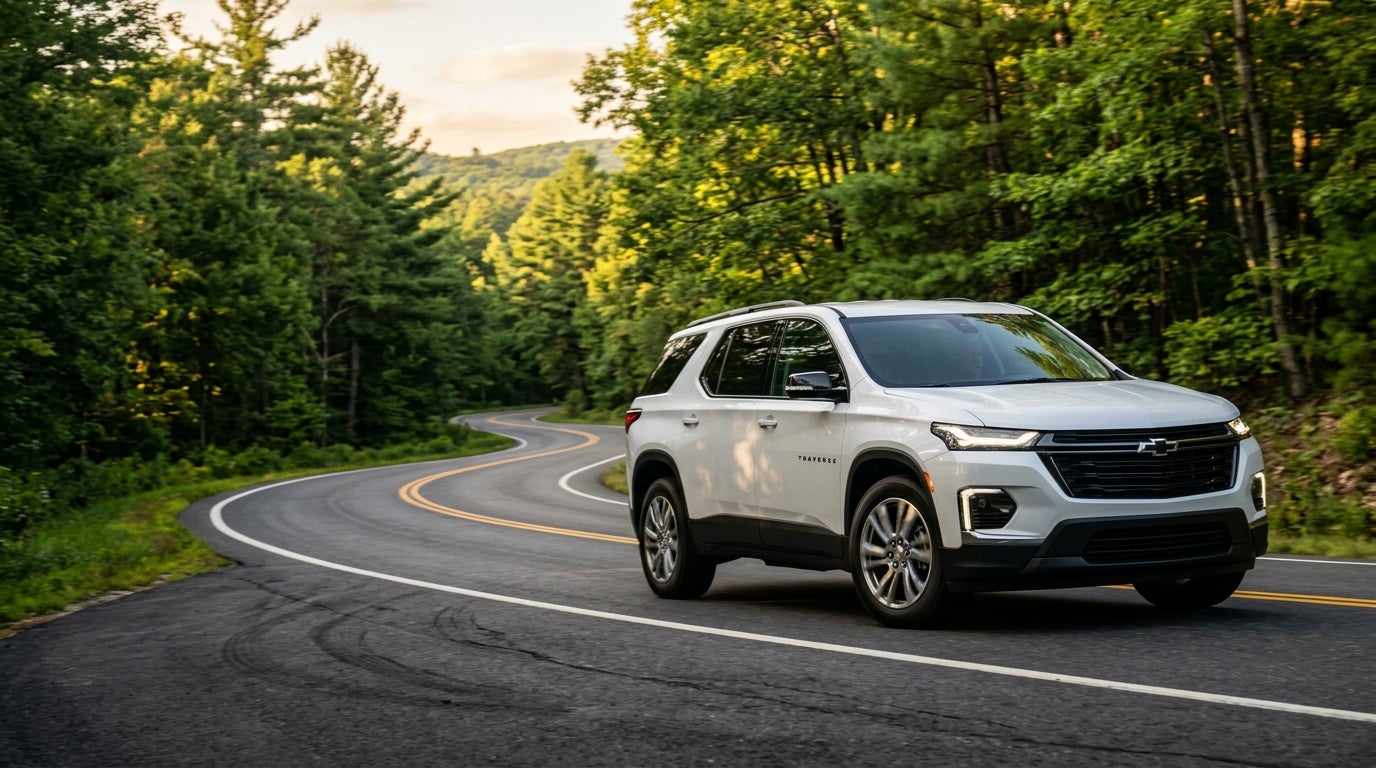
The 2027 Traverse measures 204.5 inches long, 79.6 inches wide, and 69.6 inches tall on a 121-inch wheelbase — proportions that communicate presence without the bulk of a body-on-frame SUV. The exterior is finished with projector-beam LED headlights, LED daytime running lights, LED rear and brake lights, and side indicator LEDs, so the lighting signature is consistent and modern at every angle.

Trim-specific exterior details create meaningful visual differences across the lineup. The AWD LT and FWD LT wear chrome bright trim around the side windows and a painted front bumper. The AWD RS and FWD RS replace chrome with black trim around the side windows, giving the RS a blacked-out, street-focused look that reads younger and more aggressive. The AWD Z71 adds black trim around the windows as well, but pairs it with front tow/recovery hooks — a functional exterior detail that signals genuine off-road intent rather than cosmetic ruggedness.

Wheel size also differentiates the trims at a glance. The LT trims start on 18-inch alloy wheels. The RS trims step up to 22-inch alloy wheels as standard equipment. The Z71 rides on 18-inch alloys wrapped in all-terrain tires, prioritizing grip over visual flash. A roof spoiler and black roof rails are standard across the lineup.

Six exterior colors have been announced: Summit White, Mosaic Black Metallic, Radiant Red Tintcoat, Sterling Gray Metallic, Polar White Tricoat, and Trillium Green Metallic. If you're currently driving something and considering a trade, you can get an estimate on your current vehicle's value before stepping into the showroom.

Performance and Capability of AWD and FWD 2027 Chevrolet Traverse Trims on Ashburnham's Terrain

Every 2027 Traverse trim shares the same turbocharged 2.5L four-cylinder engine producing 328 hp at 5,500 rpm and 326 lb-ft of torque at 3,500 rpm, paired with an automatic 8-speed transmission. The only powertrain split across the lineup is the choice between all-wheel drive and front-wheel drive — a decision that carries real consequences for anyone navigating the gently rolling, forested terrain around Ashburnham and the surrounding rural communities.

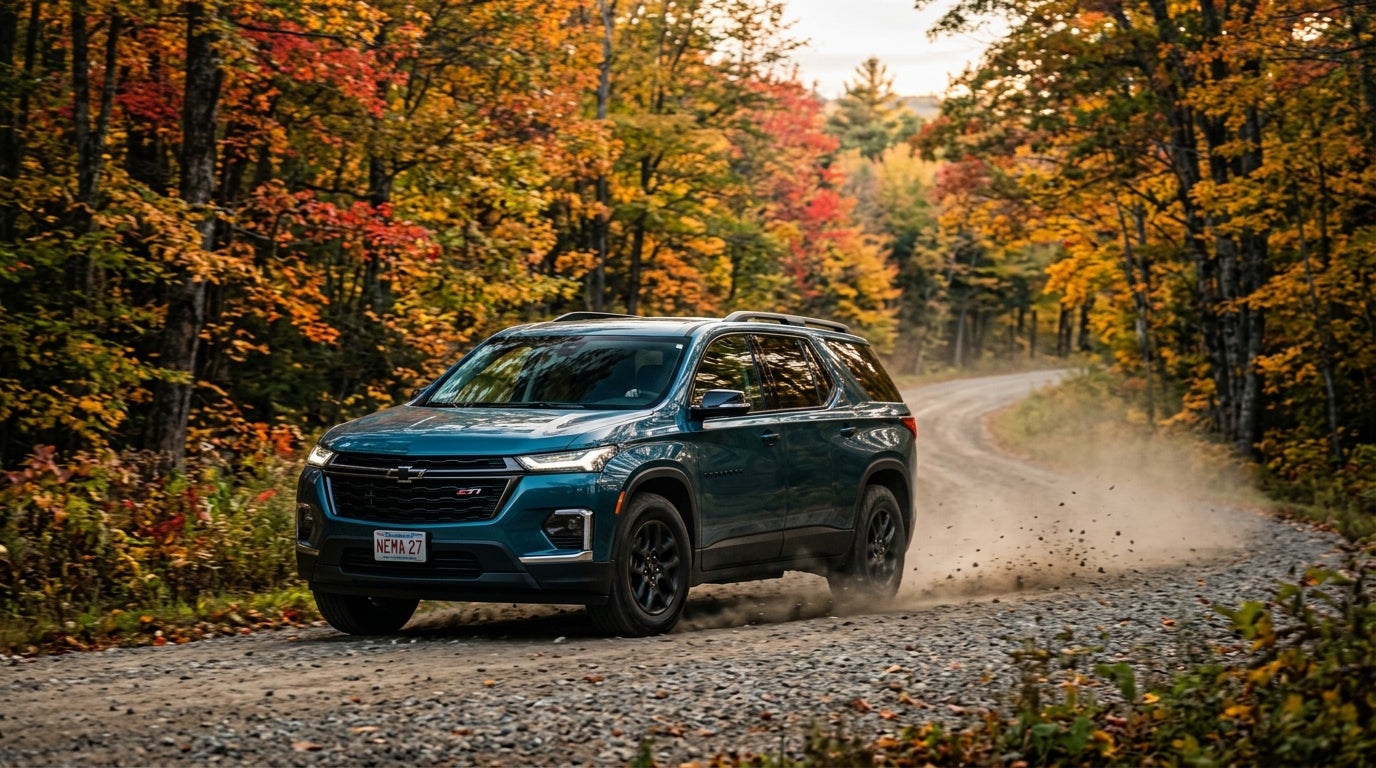
The AWD LT, AWD RS, and AWD Z71 all deliver power to all four wheels. The AWD Z71 goes further: it rides on all-terrain tires, gains an extra inch of ground clearance at 7.8 inches versus 6.8 inches on the other trims, and includes a descent control system and front tow/recovery hooks. For drivers who use gravel forest roads or pull a trailer to a boat launch on an unpaved access road, the Z71's additional hardware is more than cosmetic.

The FWD trims — FWD LT and FWD RS — give up all-weather traction but gain a slight fuel economy advantage thanks to reduced drivetrain friction. The fuel economy difference is meaningful enough to factor into a buying decision:

Feature AWD LT AWD RS AWD Z71 FWD LT FWD RS
MPG 20 city / 24 hwy / 21 combined 20 city / 24 hwy / 21 combined 20 city / 24 hwy / 21 combined 20 city / 26 hwy / 22 combined 20 city / 26 hwy / 22 combined

The FWD trims achieve a calculated range of 477 miles on a full 21.7-gallon tank versus 456 miles for AWD trims. For families doing long highway stretches between towns, that extra range per tank adds up. The AWD trims' suspension — MacPherson struts up front, multi-link independent rear — is tuned to handle the rolling terrain and variable road surfaces that characterize central Massachusetts back roads, and all trims include a hill holder and electronic hand brake auto hold for stop-and-go situations on grades.

Interior Comfort and Space in the 2027 Chevrolet Traverse for Family Adventures

Measured against the full midsize three-row class, the Traverse's interior dimensions are genuinely competitive. Edmunds notes that headroom and legroom in all three rows approach what you find in the larger Tahoe — a meaningful observation for families who regularly seat adults in the third row.

The specific numbers confirm that assessment:

Measurement Dimension
Front headroom 42.6 in
Second-row headroom 40 in
Third-row headroom 38.3 in
Front legroom 44.3 in
Second-row legroom 41.5 in
Third-row legroom 32.1 in
Front shoulder room 62.3 in
Second-row shoulder room 62.2 in
Third-row shoulder room 57.7 in
Front hip room 58.7 in
Second-row hip room 58.6 in
Third-row hip room 48.6 in
Cargo (all seats up) 22.9 cu ft
Cargo (all seats down) 97.6 cu ft
Cargo loading floor height 30.7 in

The 30.7-inch loading floor height keeps the cargo threshold accessible without requiring a step stool, which matters when loading heavy gear after a day of hiking or fishing.

Interior materials differ by trim. The LT trims come standard with upgraded cloth/velour seating available in Jet Black or a Jet Black/Gideon two-tone combination. The RS and Z71 trims are upholstered in synthetic leather (Evotex), which is more durable against wet gear and muddy boots. The RS trims also include standard ambient lighting and alloy door sill protectors, details that elevate the daily feel of the cabin.

The driver's seat on the RS trims offers six-way power adjustment with memory and 2-way power lumbar, while the LT and Z71 driver seats provide four-way power adjustment. Three-zone automatic climate control, rear climate controls, and illuminated vanity mirrors are standard across all trims.

Infotainment and Connectivity Features in the 2027 Chevrolet Traverse

The Chevy Traverse's technology stack centers on a 17.7-inch touchscreen infotainment display paired with an 11-inch digital instrument cluster — a combination that gives the driver a genuinely large information surface without requiring a separate head-up display. Both screens are standard across all five trims.

Wireless Apple CarPlay and wireless Android Auto are standard, so phones connect without a cable the moment you get in. Google built-in assistant integration is also standard, enabling voice commands for navigation, calls, and media. The system supports a built-in internet browser, over-the-air software updates, and multiple user profiles — useful for households where more than one driver regularly uses the vehicle.

Connectivity subscriptions vary by configuration. Base OnStar telematics service runs 96 months as standard, covering remote lock/unlock, vehicle start, diagnostics, and advanced automatic collision notification. The available 3 Years OnStar One option extends Wi-Fi connectivity via embedded SIM to 36 months of unlimited data. A 3-month SiriusXM satellite radio trial is standard, with an available 3 Years SiriusXM Subscription option for buyers who want long-term satellite coverage.

The RS and AWD RS trims include a standard 12-speaker Bose audio system with subwoofer as part of their standard equipment — a meaningful upgrade over the 6-speaker system in the base LT and Z71 trims. The LT and Z71 trims can add the same Bose 12-speaker setup through the available Enhance Driving Package, which also bundles Super Cruise hands-free driver assistance. Traffic sign recognition and HD Surround Vision (a 360-degree camera system) are standard on the RS trims and available on LT and Z71 trims via the Driver Confidence Package.

Safety Technologies and Driver Assistance Designed for Rural Roads

A strong safety suite comes standard on every 2027 Traverse trim in Leominster — the kind of coverage that matters when you're navigating two-lane roads through forested terrain or pulling out of a rural intersection with limited sightlines.

The airbag count is 7, covering front, front side, front hip, and side curtain positions across all three rows. All seat positions in every row include 3-point belts with pre-tensioners; front belts are height-adjustable. LATCH child-seat anchors are standard.

Active safety systems standard across all trims include:

Forward Collision Alert monitors the road ahead and warns the driver when a collision risk is detected as low as 5 mph. Automatic Emergency Braking applies the brakes autonomously at low speed front and rear. Intersection Automatic Emergency Braking uses radar and camera to detect cross-traffic at intersections and applies the brakes if needed — a system that activates in the kind of low-visibility intersection situations common on rural routes. Rear Cross Traffic Braking uses radar to detect vehicles approaching from the side while reversing. Lane Keep Assist (LKA) gently steers the vehicle back toward the lane center if drift is detected. Side Blind Zone Alert monitors the blind spots and alerts the driver to vehicles alongside.

Standard equipment also includes Rear Park Assist with camera and sensors, a rearview camera with guidance display, and Hitch Guidance with Hitch View — a trailer-hitch alignment camera system that simplifies coupling a trailer without a spotter.

The Enhance Driving Package (available on LT and Z71 trims, standard on RS trims) adds Super Cruise hands-free highway driving, Driver Attention Assist, full autopilot parking, and traffic sign recognition. The Driver Confidence Package (available on LT and Z71 trims) adds HD Surround Vision 360-degree cameras, a digital rearview mirror, rear seat monitoring camera, and keyless entry and start.

Pricing Breakdown of All 2027 Chevrolet Traverse Trims

The 2027 Chevy Traverse lineup in Fitchburg covers a wide price range, with the five covered trims spreading from the value-focused LT to the performance-styled RS. Note that all MSRPs below are base figures before options, packages, or destination charges. A destination charge of $1,995 applies to all trims.

Trim Drivetrain Base MSRP
FWD LT Front-wheel drive $40,800
AWD LT All-wheel drive $42,800
AWD Z71 All-wheel drive $49,100
FWD RS Front-wheel drive $55,800
AWD RS All-wheel drive $57,800

The FWD LT at $40,800 is the entry point, delivering the full 328 hp powertrain, 17.7-inch touchscreen, 7-passenger seating, standard safety suite, and 22 mpg combined. The AWD LT at $42,800 adds all-wheel drive for a $2,000 premium — a straightforward value calculation for buyers in areas where winter traction matters.

The AWD Z71 at $49,100 is the off-road and towing-focused choice, adding all-terrain tires, 7.8 inches of ground clearance, a descent control system, and front recovery hooks over the AWD LT. It also upgrades to synthetic leather seating and alloy door sill protectors.

The FWD RS and AWD RS are positioned as the style-forward choices, arriving at $55,800 and $57,800 respectively. Both RS trims include the 12-speaker Bose audio system, Super Cruise, HD Surround Vision, 22-inch wheels, ambient cabin lighting, memory driver seat, power passenger seat, heated front and rear seats, and a digital rearview mirror — features that require multiple option packages on LT and Z71 trims.

For families who want a well-equipped daily driver without the off-road hardware of the Z71, the RS trims bundle the most technology per dollar at their price point.

Feature AWD LT AWD RS AWD Z71 FWD LT FWD RS
Drivetrain All-wheel drive All-wheel drive All-wheel drive Front-wheel drive Front-wheel drive
Engine 2.5L 2.5L 2.5L 2.5L 2.5L
Horsepower 328 hp 328 hp 328 hp 328 hp 328 hp
Torque 326 lb-ft 326 lb-ft 326 lb-ft 326 lb-ft 326 lb-ft
Transmission automatic 8-speed automatic 8-speed automatic 8-speed automatic 8-speed automatic 8-speed
Base MSRP $42,800 $57,800 $49,100 $40,800 $55,800

Warranty Coverage and Maintenance Services for 2027 Chevrolet Traverse Owners and Surrounding Areas

Chevrolet backs the 2027 Traverse with a layered warranty structure that provides meaningful long-term coverage:

Coverage Type Duration Distance
Bumper-to-bumper 36 months 36,000 mi
Powertrain 60 months 60,000 mi
Roadside assistance 60 months 60,000 mi
Anti-corrosion 72 months 100,000 mi
Paint 36 months 36,000 mi
Full service 24 months 24,000 mi

The 5-year/60,000-mile powertrain warranty covers the engine, transmission, and drivetrain components — the systems that matter most for buyers who will be towing, navigating unpaved roads, or putting high annual mileage on their vehicle. The 6-year/100,000-mile anti-corrosion warranty is particularly relevant in New England, where road salt accelerates body panel deterioration.

Chevrolet's OnStar telematics system also includes vehicle diagnostics accessible remotely, so issues can be flagged before they become larger repair events. Owners who want to stay ahead of scheduled maintenance can book their service appointment online at Colonial Chevrolet-West, INC. at 314 John Fitch Hwy, Fitchburg, MA 01420. The service team is familiar with the specific demands that New England winters, rural terrain, and towing place on Traverse drivetrains and suspension components.

Awards, Expert Reviews, and Recognition of the 2027 Chevrolet Traverse

No formal awards have been announced for the 2027 model year at the time of publication, as the vehicle has been unveiled but is not yet on sale. However, expert commentary on the current-generation Traverse is instructive.

Edmunds observes that the Traverse packs interior headroom and legroom in all three rows that rivals the larger Tahoe — and outperforms most crossover competitors in that respect. That assessment aligns directly with the dimensional data: 42.6 inches of front headroom, 40 inches in the second row, and 38.3 inches in the third row are numbers that allow adult passengers to ride comfortably in every seat.

MotorTrend notes that the Traverse's steering, brakes, body control, and handling exceed what buyers typically expect from a family hauler at this size and price point. Car and Driver adds that while the Traverse feels its size at low speed in parking situations, it becomes noticeably more composed and smaller-feeling once speed picks up — a characteristic that makes highway driving on longer trips genuinely comfortable rather than merely manageable.

In the competitive field that includes the Ford Explorer, Honda Pilot, Hyundai Palisade, Kia Telluride, Toyota Grand Highlander, and Volkswagen Atlas, the Traverse differentiates on interior volume, powertrain output at 328 hp, and the breadth of its trim lineup from value-focused LT to adventure-ready Z71 to sport-styled RS.

Frequently Asked Questions from Buyers About the 2027 Chevrolet Traverse

Q: Does the AWD Z71 have enough ground clearance for unpaved back roads?

The AWD Z71 has a ground clearance of 7.8 inches, which is 1 inch more than the 6.8 inches on the other four trims. It also comes standard with all-terrain tires, a descent control system, front tow/recovery hooks, and all-wheel drive. For the gravel forest roads and rolling terrain common in the Ashburnham area, the Z71's combination of extra clearance and all-terrain rubber provides a meaningful advantage over the standard AWD LT. It is not a rock-crawling off-roader, but it handles unpaved access roads and snowy rural routes with confidence.

Q: Can the 2027 Traverse tow a boat or trailer?

All five trims are rated to tow up to 5,000 lbs when properly equipped. That capacity covers a small fishing boat, a utility trailer loaded with farm equipment, a personal watercraft, or a loaded cargo trailer. Hitch Guidance with Hitch View is standard across all trims, providing a camera-assisted view of the hitch alignment point to simplify connecting a trailer without a second person guiding you.

Q: What is the difference between the RS and LT trims?

The RS trims are the most feature-rich configurations in the lineup at their price point. Both the FWD RS and AWD RS include as standard equipment: a 12-speaker Bose audio system with subwoofer, Super Cruise hands-free highway driving, HD Surround Vision 360-degree cameras, 22-inch alloy wheels, synthetic leather seating, memory driver seat, 6-way power driver seat with lumbar, heated front and rear seats, ambient cabin lighting, a digital rearview mirror, and Keyless Open-and-Start. The LT trims start with a 6-speaker audio system, 18-inch wheels, and cloth/velour seating — many RS features can be added via option packages, but the RS bundles them at a lower effective cost per feature.

Q: How do FWD and AWD fuel economy compare across trims?

The FWD LT and FWD RS return 20 city / 26 highway / 22 combined mpg. The three AWD trims — AWD LT, AWD RS, and AWD Z71 — each return 20 city / 24 highway / 21 combined mpg. On a full 21.7-gallon tank, FWD trims have a calculated range of 477 miles versus 456 miles for AWD trims. For buyers whose primary roads are well-maintained and who don't need winter traction on a daily basis, the FWD trims offer a modest but real fuel economy advantage.

Q: How do I see available 2027 Traverse models at Colonial Chevrolet-West?

You can browse our current new Traverse inventory online at any time, or give us a call at (978) 342-8713 to speak with a product specialist about trim availability, option packages, and current allocation. If you'd prefer to visit in person, get directions to our Fitchburg showroom at 314 John Fitch Hwy and see the Traverse in person — the three-row interior and cargo area are best appreciated when you can sit in all three rows and measure it against your family's actual needs.


© 2026 Colonial Chevrolet-West, INC.. All rights reserved.

Posted in:

Related Posts

How Do You Choose the Right Tires for a 2027 Chevrolet Traverse

How Do You Choose the Right Tires for a 2027 Chevrolet Traverse?

To choose the right tires for a 2027 Chevrolet Traverse, match the tire size, load rating, and tread pattern to your specific trim level—ranging from 18-inch all-season or all-terrain setups to 22-inch high-performance options—while ensuring all four tires share matching tread depths for All - Wheel Drive safety. Selecting tires optimized for central Massachusetts winter conditions keeps your three-row family SUV responsive, quiet, and secure year-round. Selecting replacement tires for a mid-size SUV requires balancing vehicle weight, drivetrain demands, and regional driving conditions. The 2027 Chevrolet Traverse comes factory-equipped with specific wheel and tire configurations designed around individual trim dynamics. The LT trim uses versatile all-season tires, while the off-road Z71 features specialized all-terrain rubber with reinforced sidewalls. Sportier trims like the RS and High Country incorporate low-profile street tires mounted on larger alloy wheels. Maintaining these factory dimensions is critical for handling accuracy, speedometer calibration, and electronic safety system performance. Equally important is drivetrain health. Because most 2027 Traverse models feature an All-Wheel Drive or advanced Twin-Clutch AWD system, running mismatched tire sizes or severely unequal tread depths creates variance in wheel rotational speeds. This variance places mechanical stress on the transfer case and rear differential modules. When replacing worn tires, installing a matching set of four ensures uniform traction and protects complex drivetrain components from unnecessary wear. Regular maintenance plays a foundational role in maximizing tire performance and longevity. During routine multi-point inspections, service technicians check inflation levels, evaluate tread depth across all four wheel positions, and check for hidden suspension misalignment. If you need assistance selecting the correct factory-spec tire or want a tread health evaluation, stop by our Fitchburg service center at 314 John Fitch Hwy or give our service advisors a quick call at (978) 342-8713. Table of Contents What Standard Tire Sizes, Load Ratings, and Speed Ratings Fit the 2027 Chevy Traverse? Should You Switch to Dedicated Winter Tires for Driving in This Area? How Do You Diagnose Uneven Tire Wear and Relearn the TPMS After Rotation? What Additional Installation Costs and Service Fees Come with New Traverse Tires? Frequently Asked Questions About Chevrolet Traverse Tire Selection and Maintenance Schedule Certified Chevrolet Traverse Tire Service and Maintenance What Standard Tire Sizes, Load Ratings, and Speed Ratings Fit the 2027 Chevy Traverse? The 2027 Chevrolet Traverse in Leominster uses factory tire sizes spanning 18, 20, and 22 inches depending on trim level, requiring load index ratings between 109 and 112 alongside H or V speed ratings. Chevrolet fits each 2027 Traverse trim with distinct wheel diameters and tire profiles to support specific driving characteristics: Traverse LT: Standard equipment includes 18-inch aluminum wheels wrapped in 255/65R18 all-season tires. Available LT equipment packages upgrade to 20-inch wheels paired with 255/55R20 all-season tires for enhanced steering feedback. Traverse Z71: Standard equipped with 18-inch high-gloss Black machined-face aluminum wheels fitted with 265/65R18 all-terrain tires. This setup provides taller rubber sidewalls that absorb trail impacts and guard wheel rims against curb damage and road debris. Traverse RS & High Country: Standard fitted with 22-inch high-gloss Black or machined-face wheels riding on 275/45R22 tires. The shorter sidewall profile increases cornering firmness and gives the vehicle a sporty street profile. Load and speed ratings are critical engineering factors for replacement tire selection. The Chevrolet Traverse requires a load index of at least 109 (supporting up to 2,271 lbs per tire) to 112 (supporting up to 2,469 lbs per tire). This weight capacity safely accommodates the vehicle's curb weight, seven- or eight-passenger cabin loads, maximum interior cargo volume of about 98 cubic feet, and standard trailering capacities up to 5,000 lbs. Installing tires with lower load ratings compromises structural integrity and increases heat buildup under heavy loads. Speed ratings must also comply with factory specifications. Traverse replacement tires require an H rating (certified up to 130 mph) or a V rating (certified up to 149 mph). These ratings reflect not just top speed capabilities, but also tire construction strength, heat dissipation efficiency, and cornering stiffness under sudden maneuvers. Maintaining correct cold tire inflation pressure is another essential factor. Chevrolet specifies a recommended cold tire pressure of 35 PSI for all four tires on most Traverse configurations. Correct inflation ensures uniform contact with the road, prevents premature wear along the outer edges, and optimizes fuel efficiency for the 2.5L turbocharged engine. Should You Switch to Dedicated Winter Tires for Driving in This Area? Installing dedicated winter tires on a 2027 Chevrolet Traverse in Massachusetts delivers substantially shorter stopping distances and improved cornering stability whenever ambient temperatures remain below 45 degrees Fahrenheit, outperforming standard all-season tires on cold, icy, or snow-covered pavement. Central Massachusetts winter conditions expose vehicle tires to freezing temperatures, frequent slush, and heavily salted road surfaces. Standard all-season rubber compounds begin to harden as temperatures drop below 45 degrees, losing flexibility and surface adhesion even on completely dry pavement. Dedicated winter tires are formulated with advanced flexible polymer compounds and dense tread siping that maintain elasticity in sub-freezing weather. Winter tires featuring the Three-Peak Mountain Snowflake (3PMSF) symbol provide specialized design benefits: Hydroplaning and Slush Resistance: Directional tread patterns and deep lateral grooves push standing water and slush away from the tire footprint. Braking and Traction: Micro-sipes bite into hard-packed snow and ice, creating additional friction edges that significantly reduce stopping distances during emergency braking. Drivetrain Synergy: Pairing winter tires with All-Wheel Drive or the Z71 trim's Twin-Clutch AWD creates maximum control. While AWD provides drive torque to all wheels, only tire tread grip provides steering direction and stopping traction. For households navigating elevated rural routes and hilly secondary roads, such as those surrounding Watatic Mountain in Ashburnham, dedicated winter tires offer essential control during winter storms. Maintaining two dedicated tire sets—all-season or all-terrain rubber for spring through autumn, and 3PMSF winter tires for cold months—extends the operating life of both sets while providing optimal safety year-round. How Do You Diagnose Uneven Tire Wear and Relearn the TPMS After Rotation? Uneven inner or outer shoulder wear on a 2027 Chevrolet Traverse tire indicates wheel alignment variance or persistent pressure loss, while TPMS relearning requires triggering the dashboard Driver Information Center menu or using a handheld diagnostic tool after rotating tires every 7,500 miles. Regular tire inspection helps identify mechanical alignment issues before they destroy tire tread life: Inner Edge Wear: Excessive wear localized on the inner tire shoulder usually points to excessive negative camber or toe-out alignment. This issue often develops after striking severe potholes or worn suspension bushings. Outer Edge Wear: Heavy outer shoulder wear typically results from excessive toe-in alignment settings or aggressive cornering at high speeds. Dual Shoulder Wear: Accelerated wear on both outer edges with normal center tread indicates chronic under-inflation, forcing the tire to ride heavily on its outer shoulders. Center Tread Wear: Accelerated wear down the center strip of the tread face stems from persistent over-inflation. Tread depth measurements dictate replacement timing. Federal safety standards set the minimum legal tread limit at 2/32 of an inch, marked by solid rubber wear bars across the tread grooves. However, tire manufacturers and service experts recommend replacing tires when tread reaches 4/32 of an inch, particularly before winter. Rain and snow evacuation capabilities diminish rapidly below this threshold, increasing hydroplaning risks. Rough road surfaces and frost-heaved pavement, common along the rural wooded roads around Ashby, gradually alter wheel alignment angles over time. Checking four-wheel alignment annually prevents premature shoulder scrub and extends tread life. Tire rotation every 7,500 miles distributes front steering and acceleration forces evenly. Because front tires wear faster due to turning friction, moving tires front-to-back balances wear rates across all four positions. After every tire rotation, the Tire Pressure Monitoring System (TPMS) must be relearned so the instrument cluster correctly displays the true tire pressure for each wheel position. Relearning the TPMS can be accomplished through the driver menu: Select the Tire Pressure monitor screen on the dashboard display using the steering wheel controls. Press and hold the thumbwheel select button until the horn chirps, signaling that the TPMS relearn mode is active. Use a physical TPMS sensor activation tool at each wheel position—starting with the left front tire and proceeding clockwise—until the vehicle horn chirps at each corner to confirm sensor position registration. Alternatively, our service department performs this recalibration digitally during routine tire maintenance. What Additional Installation Costs and Service Fees Come with New Traverse Tires? Total replacement costs for Chevrolet Traverse tires in Fitchburg include the price of the tire units plus routine service fees for mounting, dynamic high-speed balancing, fresh valve stems or TPMS seals, old tire recycling fees, and state environmental disposal taxes. Budgeting for new tires involves accounting for the complete professional installation process: Mounting and Dynamic Balancing: Dismounting old tires and securing new rubber onto alloy wheels requires specialized tire equipment to avoid rim scratching. High-speed dynamic balancing attaches small wheel weights to eliminate high-speed steering wheel vibrations and protect wheel bearings. TPMS Valve Service: Service technicians install fresh rubber valve stems or replace rubber sealing O-rings and valve cores on electronic TPMS sensors to prevent slow air leaks. Old Tire Disposal and Recycling: Standard environmental fees cover the safe, eco-friendly disposal and recycling of scrap tires in compliance with state regulations. Four-Wheel Alignment Check: Performing a four-wheel alignment alongside new tire installation ensures the suspension angles match factory settings, preventing immediate uneven wear on your new investment. Before purchasing replacement tires, review our current service and parts specials to take advantage of available maintenance offers, tire rebates, and bundled alignment packages. Frequently Asked Questions About Chevrolet Traverse Tire Selection and Maintenance Q: How do I check the exact factory tire size on my Chevy Traverse? The precise factory tire size for your specific 2027 Traverse is printed on the official Tire and Loading Information label, located on the driver-side center door pillar (B-pillar door jamb). This decal lists the original equipment tire dimensions, recommended load index, speed rating, and official cold tire inflation pressure of 35 PSI. Q: Does an All-Wheel Drive Chevy Traverse require all four tires to be replaced at once? Replacing all four tires simultaneously is strongly recommended on All-Wheel Drive Traverse models. Variance in tread depth exceeding 2/32 of an inch between tires alters individual wheel circumference and rotational speeds, creating mechanical drag and heat buildup across the transfer case and twin-clutch rear differential. Q: What is the recommended tire rotation interval for the 2027 Traverse? Chevrolet recommends rotating tires every 7,500 miles or at least once every six months, whichever comes first. Aligning tire rotations with standard engine oil and filter service intervals ensures consistent wear patterns across front and rear axles and extends the overall usable lifespan of the tire set. Q: How does wheel size impact ride comfort on the Traverse LT versus the RS trim? The 18-inch wheels on the LT trim utilize taller tire sidewalls ( 255/65R18) that absorb pavement bumps and pothole impacts efficiently, delivering a softer ride. The 22-inch wheels on the RS trim ( 275/45R22) feature shorter sidewalls that improve steering response and cornering stability while providing a firmer ride feel. Q: Can I drive on a Traverse tire that has reached 3/32 of an inch tread depth? While 3/32 of an inch tread depth remains legally above the 2/32 of an inch wear bars, traction in rain and snow drops off significantly. Replacing tires before they wear down to 3/32 of an inch helps prevent hydroplaning risks on wet highways and retains sufficient gripping edges for winter driving safety. Schedule Certified Chevrolet Traverse Tire Service and Maintenance Maintaining optimal tire tread, correct wheel alignment, and accurate inflation pressure ensures your 2027 Chevrolet Traverse handles smoothly, operates quietly, and delivers maximum safety across all road conditions. Whether you need a multi-point tire inspection, seasonal tire swap, computer-guided wheel alignment, or a fresh set of factory-recommended tires, our factory-trained service technicians deliver certified care tailored specifically to your vehicle. Take proactive steps to protect your vehicle's safety and driving dynamics today. Conveniently schedule your tire service online, drop by visit our Fitchburg service department at 314 John Fitch Hwy, or speak directly with an advisor by calling (978) 342-8713. © 2026 Colonial Chevrolet-West, INC.. All rights reserved.
How Much Does a Chevrolet Silverado Oil Change Cost?

How Much Does a Chevrolet Silverado Oil Change Cost?

A standard full synthetic oil change for a gasoline-powered 2026 Chevrolet Silverado typically costs between $75 and $105, while service for a 3.0L Duramax turbo-diesel model generally ranges from $110 to $180 or more. The final price depends primarily on your truck's specific engine, fluid capacity, required oil specifications, and applicable environmental fees. +----------------------+--------------------+-------------------+ | Engine Option | Required Oil Spec | Typical Cost Range| +----------------------+--------------------+-------------------+ | 2.7L TurboMax 4-Cylinder | GM dexos1 Gen 3 5W-30 | $75 - $95 | | 5.3L V8 Gasoline | GM dexos1 Gen 3 0W-20 | $80 - $105 | | 6.2L V8 Gasoline | GM dexos1 Gen 3 0W-20 | $85 - $110 | | 3.0L Duramax Turbo-Diesel| GM dexosD 0W-20 | $110 - $180+ | +----------------------+--------------------+-------------------+ Oil changes represent one of the most critical preventive maintenance services for light-duty and heavy-duty trucks. Smaller gasoline engines require fewer quarts of motor oil, keeping base service prices near the lower end of the spectrum. Larger V8 engines and high-capacity diesel powertrains mandate additional quarts of specialized lubricant and heavy-duty filters, which increases the total cost of parts and labor. Several variables influence the final price on your service invoice: Engine Oil Capacity: Base oil change packages often cover up to 5 quarts of oil. Larger truck engines require between 6 and 10 quarts, and extra quarts of full synthetic oil add $7 to $12 per quart to the total. Oil Specification Standards: Modern GM engines require synthetic lubricants meeting GM dexos1 Gen 3 standards for gasoline engines or GM dexosD standards for diesel engines, which cost more than conventional oils but protect engine components far better. Oil Filter Design: High-flow cartridge filters and heavy-duty spin-on filters engineered for turbocharged or diesel applications carry a higher component cost than basic spin-on filters used in smaller passenger vehicles. Disposal and Shop Fees: Used oil recovery, hazardous material processing, and local recycling fees usually add between $5 and $15 to the final bill. To get an accurate estimate tailored to your truck's exact trim and engine setup, you can speak directly with our service team by making a quick call to (978) 342-8713 or by visiting our service department at 314 John Fitch Hwy. Table of Contents What Oil Specification and Capacity Does Your Silverado Engine Require? Why Does a Duramax Diesel Silverado Oil Change Cost More Than a Gas Model? How Does the Chevrolet Silverado Oil Life Monitoring System Work and How Do You Reset It? What Is Included in a Certified Chevrolet Multi-Point Inspection and Service Visit? Common Questions About Chevrolet Silverado Oil Change Service Where Can You Get Certified Chevrolet Silverado Oil Change Service? What Oil Specification and Capacity Does Your Silverado Engine Require? The 2024 Chevrolet Silverado requires full synthetic motor oil that strictly meets GM dexos1 Gen 3 specifications for gasoline engines or GM dexosD specifications for diesel engines, with fluid capacities ranging from 6 to 10 quarts depending on the exact engine installed under the hood. Using non-approved motor oil can compromise engine protection, reduce fuel efficiency, and potentially void factory warranty coverage under the 3-year/36,000-mile bumper-to-bumper warranty or 5-year/60,000-mile powertrain warranty. +----------------------+---------------+----------------+ | Engine Configuration | Oil Capacity | Viscosity Grade| +----------------------+---------------+----------------+ | 2.7L TurboMax Inline-4 | 6 quarts | SAE 5W-30 | | 5.3L EcoTec3 V8 | 8 quarts | SAE 0W-20 | | 6.2L EcoTec3 V8 | 8 quarts | SAE 0W-20 | | 3.0L Duramax Turbo-Diesel-I6 | 10 quarts | SAE 0W-20 (dexosD) | +----------------------+---------------+----------------+ The 2.7L TurboMax turbocharged four-cylinder engine generates 310 hp and 430 lb-ft of torque. This powertrain relies on high-boost turbocharging, which generates elevated thermal stress within the engine bay. To protect internal bearings and turbocharger oil lines, GM specifies 6 quarts of SAE 5W-30 full synthetic oil meeting GM dexos1 Gen 3 requirements. This specification contains advanced thermal oxidation inhibitors designed to prevent low-speed pre-ignition and sludge buildup in forced-induction engines. Naturally aspirated V8 options, including the 5.3L V8 and 6.2L V8, feature larger crankcases that take 8 quarts of SAE 0W-20 full synthetic oil. The lower viscosity grade reduces internal fluid friction across the valve train and cylinder walls, assisting active fuel management systems while maintaining high-temperature film strength during heavy hauling or towing operations. Trucks operating under demanding workloads—such as hauling firewood or pulling snowmobile trailers through steep rural grade ascents near Ashburnham—place heavy stress on engine oil. Certified technicians ensure that every fill meets factory viscosity and volume guidelines, preventing premature oil shear and engine wear. Why Does a Duramax Diesel Silverado Oil Change Cost More Than a Gas Model? A Duramax diesel Silverado oil change costs more than a gas model because the inline-six engine requires up to 10 quarts of heavy-duty diesel motor oil, specialized high-capacity filtration, and additional maintenance checks unique to diesel emissions systems. The combination of larger fluid volume and specialized chemical formulations increases both parts and labor costs compared to standard gasoline oil services. The primary factor driving higher diesel oil change expenses is fluid volume. While a standard four-cylinder truck engine uses 6 quarts of oil, the 3.0L Duramax turbo-diesel engine requires 10 quarts of GM dexosD full synthetic oil. This specialized oil is formulated with low-SAPS (sulfated ash, phosphorus, and sulfur) technology to protect delicate diesel particulate filters and exhaust gas recirculation components from ash accumulation and chemical fouling. The physical hardware on diesel engines also contributes to the maintenance investment. Diesel oil filters feature heavier synthetic filtration media designed to trap fine soot particles generated during high-compression diesel combustion. During a diesel oil service visit, factory-trained technicians also inspect soot loading, check fuel filters, and top off exhaust fluid levels. Under standard General Motors complimentary maintenance terms for initial ownership, diesel models include a top-off of ACDelco Diesel Exhaust Fluid up to 4 gallons alongside the primary oil service, tire rotation, and vehicle inspection. How Does the Chevrolet Silverado Oil Life Monitoring System Work and How Do You Reset It? The Chevrolet Silverado Oil Life Monitoring System calculates remaining oil life using an advanced engine computer algorithm that continuously tracks engine revolutions, operating temperatures, idle time, and vehicle load rather than relying on a simple mileage counter. On high-trim models equipped with the 13.4-inch touchscreen display, drivers can view the remaining oil percentage and reset the monitor through the vehicle software menu after completing an oil change. The system adapts dynamically to individual driving conditions. Frequent short trips in cold winter weather, extended idling on job sites, or heavy stop-and-go towing through Ashby accelerate oil breakdown, causing the system to alert the driver for service sooner than a highway-driven truck would require. When remaining oil life drops below 15 percent, the driver information center displays a "Change Engine Oil Soon" message. +------------------------------------------------+ | Touchscreen Reset Steps (High-Trim Silverados) | +------------------------------------------------+ | 1. Turn the vehicle ignition to the ON position with the engine off. | 2. On the 13.4-inch center touchscreen, select the "Vehicle Info" icon. | 3. Scroll through the vehicle status menu and tap on "Oil Life". | 4. Press and hold the "Reset" button on the screen until the display reads 100%. | 5. Turn the ignition off, then restart the truck to confirm the reset successfully. +------------------------------------------------+ For models utilizing driver steering wheel controls rather than the central touchscreen, navigate to the Information tab on the instrument cluster display, scroll down to Oil Life, and press and hold the thumbwheel control knob until the system chimes and resets to 100 percent. What Is Included in a Certified Chevrolet Multi-Point Inspection and Service Visit? A certified Chevrolet oil change service visit includes a drain and refill of factory-approved full synthetic oil, a new OEM oil filter, a four-tire rotation, and a comprehensive multi-point vehicle inspection covering safety systems, underbody components, and vital fluid levels. This multi-system check identifies early wear items before they turn into unexpected breakdowns on the road. During a standard maintenance visit, certified technicians execute a thorough inspection protocol that evaluates: Brake System Integrity: Measuring front and rear brake pad thickness, rotor surface condition, and hydraulic line security. Tire Wear and Alignment Check: Inspecting tread depth across outer, center, and inner grooves, examining sidewalls for damage, and adjusting inflation pressure. Fluid Level Verification: Inspecting and topping off windshield washer fluid, engine coolant, transmission fluid, and power steering or brake reserves. Underbody and Suspension: Checking drive belts, hoses, shocks, struts, ball joints, steering linkage, and exhaust heat shields for wear or play. Electrical and Battery Health: Testing battery cold-cranking amps, terminal corrosion levels, wiper blade condition, and exterior lighting operations. Staying current with factory inspection schedules helps safeguard long-term mechanical reliability. Owners can explore current service and parts specials to save on seasonal upkeep, or easily schedule a service appointment online to secure a convenient drop-off time. Common Questions About Chevrolet Silverado Oil Change Service Q: How many quarts of oil does the 2.7L TurboMax engine require? The 2.7L TurboMax turbocharged inline four-cylinder engine requires exactly 6 quarts of SAE 5W-30 full synthetic motor oil meeting GM dexos1 Gen 3 standards. Filling the engine with the exact recommended capacity ensures proper oil pressure across the variable-displacement oil pump and maintains cooling flow to the turbocharger center bearing assembly. Q: Does using non-dexos approved oil affect my Silverado warranty? Using motor oil that does not meet official GM dexos specifications can jeopardize factory warranty coverage if engine damage occurs as a direct result of improper lubrication. General Motors engineers formulated dexos standards to prevent internal sludge, oil oxidation, and low-speed pre-ignition in modern high-compression engines. Using non-approved oil during the 3-year/36,000-mile bumper-to-bumper warranty or 5-year/60,000-mile powertrain warranty window can result in disputed repair claims for engine failures. Q: How often should I change the oil in a 2024 Chevrolet Silverado if I tow frequently? If you frequently tow heavy trailers, haul equipment, or operate in severe weather conditions, you should follow the Oil Life Monitoring System alerts and plan on oil service intervals closer to every 3,000 to 5,000 miles. Heavy loads and prolonged idling raise oil temperatures and accelerate additive depletion. Even under light driving conditions, motor oil should be changed at least once every 12 months regardless of mileage. Q: Can I bring my Silverado in for an oil change without an appointment? Our service department offers express lube lanes to handle routine oil changes, tire rotations, and battery tests without requiring an advance reservation. However, booking an appointment ahead of time ensures priority placement in a service bay, reduces your total waiting time, and allows technicians to pre-order any specialized filters or fluids required for your vehicle trim. Q: How long does a standard Silverado oil change take at the dealership? A standard Chevrolet Silverado oil change and multi-point vehicle inspection typically takes between 30 and 45 minutes from the time your truck enters the service bay. If additional maintenance items are requested—such as engine air filter replacement, cabin air filter installation, or brake fluid flushing—total service time may extend to approximately one hour. Where Can You Get Certified Chevrolet Silverado Oil Change Service? You can get certified Chevrolet Silverado oil change service at Colonial Chevrolet-West, INC., where factory-trained technicians use genuine GM parts, specialized service tools, and manufacturer-approved dexos lubricants engineered specifically for your truck. Professional maintenance performed by certified professionals protects your vehicle's mechanical health and preserves its resale value over time. Relying on factory-trained service advisors provides distinct ownership advantages: Factory-Trained Technicians: Mechanics who specialize exclusively in Chevrolet powertrains understand the subtle diagnostic nuances of TurboMax, EcoTec3 V8, and Duramax diesel engines. Genuine OEM Parts: We install GM Genuine Parts and ACDelco filters engineered to exact factory tolerances for optimal filtration and oil flow rates. Updated Technical Bulletins: Dealership service teams have direct access to GM software updates, recall notices, and technical service bulletins that independent quick-lube shops cannot access. Complete Vehicle Records: All completed services are logged directly into the national GM service database, maintaining a clean, verifiable service history for your truck. When your driver information center alerts you that it is time for fresh motor oil, trust our team to get the job done right. To plan your visit, get direct route details to our service center location or give our service department a call at (978) 342-8713 to reserve your maintenance appointment today. © 2026 Colonial Chevrolet-West, INC.. All rights reserved.
What Does 2026 Chevrolet Brake Service Involve

What Does 2026 Chevrolet Brake Service Involve?

Comprehensive 2026 Chevrolet brake service includes a detailed multi-point mechanical inspection, friction pad thickness measurement, disc rotor evaluation, hydraulic fluid quality testing, caliper slider lubrication, and component replacement using GM Genuine Parts or ACDelco Gold hardware. Technicians replace worn friction linings, resurface or replace distorted rotors, flush contaminated hydraulic fluid, and recalibrate electronic pad wear monitoring systems to restore original factory stopping distance and pedal response. Maintaining your vehicle's stopping system is essential for daily safety and long-term driving reliability. Most manufacturer maintenance schedules recommend a complete brake system inspection at least once a year or every 7,500 to 15,000 miles, usually performed alongside routine oil changes and tire rotations. Regular checks ensure that minor friction wear is caught before it damages critical metal components like calipers and wheel hubs. Operating conditions throughout central Massachusetts put distinct stress on braking components. Drivers navigating the steep, forested hill descents near Ashburnham experience heightened thermal load on friction linings and rotor surfaces. Furthermore, heavy winter road salt exposure between November and April accelerates surface rust on brake lines, backing plates, and caliper pins. Regular professional service removes built-up road grime and prevents corrosion from seizing moving parts. When you notice changes in braking performance, reaching our team is simple. You can give us a quick call to speak directly with an advisor, or stop by our service center on John Fitch Highway for a comprehensive evaluation. Table of Contents What Is Included in a Professional Chevrolet Brake Inspection? What Are the Signs Your Brakes Need Service and Why Does the Steering Wheel Vibrate? Why Does a Full Brake Job Cost More Than Brake Pad Replacement Alone? Dealer Service Duration vs Independent Shops and Key Technical Specifications ​ Common Questions About Chevrolet Brake Service and Maintenance ​ Schedule Your Chevrolet Brake Service Today ​ What Is Included in a Professional Chevrolet Brake Inspection? A professional Chevrolet brake inspection involves a complete hands-on evaluation of friction linings, hydraulic fluid integrity, caliper actuation, and electronic safety systems. Factory-certified technicians elevate the vehicle to examine the entire braking circuit under load and resting conditions, measuring wear against exact manufacturer tolerances. During the inspection, technicians evaluate every critical component within the system: Brake Friction Pads: Friction material thickness is measured across inner and outer pads using precision gauges to identify uneven wear caused by sticking caliper pins. Brake Rotors: Disc surfaces are inspected for heat scoring, grooves, rust ridges, and micro-cracking, while micro-meters check total thickness and lateral runout. Brake Calipers and Hardware: Hydraulic caliper pistons, rubber boots, and guide pins are checked for fluid leaks, torn seals, and mechanical binding. Hydraulic Lines and Fluid: Flexible rubber brake hoses and steel lines are inspected for cracks or corrosion, while hydraulic fluid is tested for copper contamination and moisture content. Master Cylinder and Booster: The power assist unit and master cylinder reservoir are checked for internal seal bypass and proper pressure delivery. Anti-lock Braking System Components: Wheel speed sensors, tone rings, and electronic control modules are scanned for diagnostic trouble codes. Chevrolet vehicles use advanced monitoring to keep drivers informed. Many models feature embedded electronic wear sensors that complete a low-voltage circuit when the pad friction material wears down to a preset limit, displaying a notification on the driver information center. Physical wear indicators also produce an acoustic chirping sound as an early physical signal. Service guidelines specify that brake pads with 3 mm of friction material remaining should be scheduled for replacement soon, while pads worn down to 2 mm require immediate service to prevent metal-to-metal contact with the rotor. What Are the Signs Your Brakes Need Service and Why Does the Steering Wheel Vibrate? Steering wheel vibration specifically while applying the brakes indicates rotor thickness variation or thermal distortion across the front disc rotor surfaces. As worn or warped rotors pass between the brake pads, the uneven surface forces the caliper piston back and forth, sending hydraulic pulses through the steering geometry that manifest as a distinct shake in the steering wheel. A vehicle's braking system provides clear warning signals when mechanical components begin to degrade. Recognizing these symptoms early prevents secondary damage to surrounding wheel hub assemblies and suspension linkages: Squealing or Chirping Noises: Built-in metal wear indicators on the brake pads contact the rotating disc to create a high-pitched alert when friction material is low. Harsh Grinding Sounds: Metal backplates grinding directly against the steel rotor disc signal total friction pad destruction, requiring immediate rotor and pad replacement. Spongy or Soft Pedal Feel: Air trapped in hydraulic lines, deteriorated flexible hoses, or moisture-contaminated brake fluid reduces hydraulic pressure transfer. Vehicle Pulling to One Side: A seized caliper slider pin or sticking hydraulic piston causes uneven pad application, pulling the vehicle toward the functioning side. Pulsating Brake Pedal: Thermal hotspots or lateral runout on rear rotors cause rhythmically pulsating pedal feedback during deceleration. Hydraulic brake fluid naturally absorbs atmospheric moisture over time due to seasonal humidity changes in New England. Water contamination lowers the fluid's boiling point, leading to vapor lock during hard braking stops and accelerated internal corrosion within the Anti-lock Braking System hydraulic unit. Flushing brake fluid every 2 to 3 years maintains proper hydraulic pressure and protects internal valves. Drivers looking to maintain their vehicle's stopping performance can review current Chevrolet service and parts specials before scheduling their next maintenance visit. Why Does a Full Brake Job Cost More Than Brake Pad Replacement Alone? A full brake job costs more than a simple pad swap because it replaces or resurfaces worn steel rotors, installs fresh caliper hardware, services sliding pins, and flushes hydraulic fluid alongside installing new friction pads. A pad-only service addresses solely the consumable friction lining, whereas a complete brake job restores structural metal tolerances, hydraulic integrity, and thermal heat dissipation across the entire axle assembly. Service Scope Components Addressed Primary Labor Involved Recommended Application Brake Pad Swap Friction pads only Wheel removal, caliper pivot, pad insertion Low-mileage vehicles with smooth, thick rotors Full Brake Job Pads, disc rotors, hardware clips, fluid flush Complete teardown, hub cleaning, rotor measurement, system bleed High-mileage wear, warped rotors, or metallic grinding Understanding the breakdown between parts and labor explains the total cost structure of complete brake restoration. Standard friction pad replacement averages $150 per axle in parts and basic labor. However, adding fresh disc rotors increases parts costs by $250 to $400 per axle for passenger cars and crossovers. Heavy-duty vehicles like the 2026 Chevrolet Silverado 1500 require larger, thicker rotor castings designed for towing, which increases material costs due to the heavier mass of iron required. Disc rotors cannot always be turned or resurfaced on a brake lathe to save costs. Every rotor has an engineered minimum discard limit stamped directly into the metal casting. For example, a front rotor on a light truck may start with a nominal thickness of 30 mm and carry a discard limit of 28.5 mm. If resurfacing grooves out enough metal to drop the disc below 28.5 mm, the rotor loses its structural capacity to dissipate heat without cracking. Replacing worn rotors becomes mandatory for safety. Attempting to save money by installing new pads over thin, grooved, or heat-damaged old rotors leads to premature failure. Rough rotor surfaces rapidly score fresh pad material, reducing friction contact area and generating excessive heat. Reusing old, fatigue-stressed pad retaining clips also causes pads to bind inside the bracket, leading to dragging brakes and rapid diagonal pad wear. Driving conditions on rural connector routes in Ashby subject brake systems to elevated grit and road debris, making thorough bracket cleaning and hardware replacement essential during every brake service. Dealer Service Duration vs Independent Shops and Key Technical Specifications A Chevrolet dealership brake service typically takes between 1.5 and 3 hours per axle because factory-trained technicians execute a rigorous service process that includes hub cleaning, rotor runout checks, caliper pin greasing, hydraulic bleeding, and electronic pad monitor resets. Independent quick-service facilities may perform a basic pad swap faster, but shortened timelines often skip critical steps like flushing fluid or measuring hub runout. Completing brake maintenance according to factory specifications requires precise mechanical tolerances and dedicated tooling: Pad Material Minimum Limits: Immediate replacement is required at 2 mm of friction material; service planning begins at 3 mm. Silverado 1500 Front Rotor Thickness: 30 mm nominal thickness with a minimum discard limit of 28.5 mm. Wheel Lug Nut Torque Settings: 140 lb-ft for full-size trucks and SUVs; 100 lb-ft for standard passenger cars and crossovers. Hydraulic Fluid Specifications: GM Genuine Parts Dot 3 or Dot 4 hydraulic fluid formulated to resist vapor lock under high thermal loads. Proper wheel fastener torquing is a critical step that quick-lube shops sometimes neglect with impact wrenches. Overtightening lug nuts unevenly distort the wheel hat section of the rotor, creating artificial lateral runout that leads to premature pedal pulsation. Factory technicians use calibrated torque wrenches set to exact limits to ensure uniform clamp load across the wheel stud circle. Certificated dealership service employs technicians who complete extensive hands-on training dedicated exclusively to General Motors vehicle platforms. Utilizing ACDelco OE friction sets guarantees that the friction coefficient, slotting, and chamfering match the vehicle's original engineering parameters. Furthermore, full-service facility care includes clearing road salt buildup and applying high-temperature silicone grease to caliper slider pins, preventing sticking calipers during wet New England weather. ​ Common Questions About Chevrolet Brake Service and Maintenance Q: How often should Chevrolet brake fluid be flushed? Brake fluid should be tested for moisture and flushed approximately every 2 to 3 years. Because brake fluid is hygroscopic, it naturally absorbs water from humid air over time. Moisture lowers the fluid boiling point and causes internal corrosion inside the master cylinder and Anti-lock Braking System control valves. Q: Can I drive my Chevrolet if the brake wear indicator is squealing? You can drive a short distance to a service facility when the wear indicator begins squealing, but you should schedule an inspection immediately. The chirping noise is an engineered alert that pad material is near 3 mm. Continuing to drive will wear the pads down to the metal backing plate, causing severe disc rotor scoring. Q: What is the difference between ACDelco Gold and GM Genuine Parts brake components? GM Genuine Parts are the exact original equipment components installed on the vehicle during factory assembly. ACDelco Gold parts are high-quality alternative replacement components engineered to meet General Motors specifications for fit, form, and function, offering exceptional durability and braking performance. Q: Why does my Chevrolet brake pedal feel soft or spongy after winter driving? A soft pedal usually indicates moisture contamination in the hydraulic fluid, air trapped in the lines, or a leaking caliper seal caused by road salt corrosion. When water contamination boils under friction heat, it creates air pockets that compress under foot pressure, resulting in a spongy pedal feel. Q: How do embedded electronic brake pad wear sensors work? Electronic wear sensors utilize a low-voltage wire loop embedded inside the friction pad material. As the pad wears down to its minimum limit, the disc rotor wears through the sensor wire, breaking the electrical circuit. This signal triggers a clear pad replacement notification on the driver information center. Drivers ready to maintain their vehicle's stopping performance can easily schedule a service appointment online for a professional system evaluation. Schedule Your Chevrolet Brake Service Today Maintaining a healthy braking system protects your vehicle's safety, restores original stopping power, and prevents expensive secondary repairs to calipers and hub assemblies. Whether you require a routine annual brake inspection, a hydraulic fluid flush, or a complete pad and rotor replacement, professional care ensures every component functions according to strict factory standards. Our team of factory-trained technicians uses original equipment components and precise torque specifications to keep your vehicle performing reliably in all weather conditions. To book your upcoming brake inspection or maintenance service, stop by our dealership located at 314 John Fitch Hwy, Fitchburg, MA 01420 or give our service department a call directly at (978) 342-8713. © 2026 Colonial Chevrolet-West, INC.. All rights reserved.