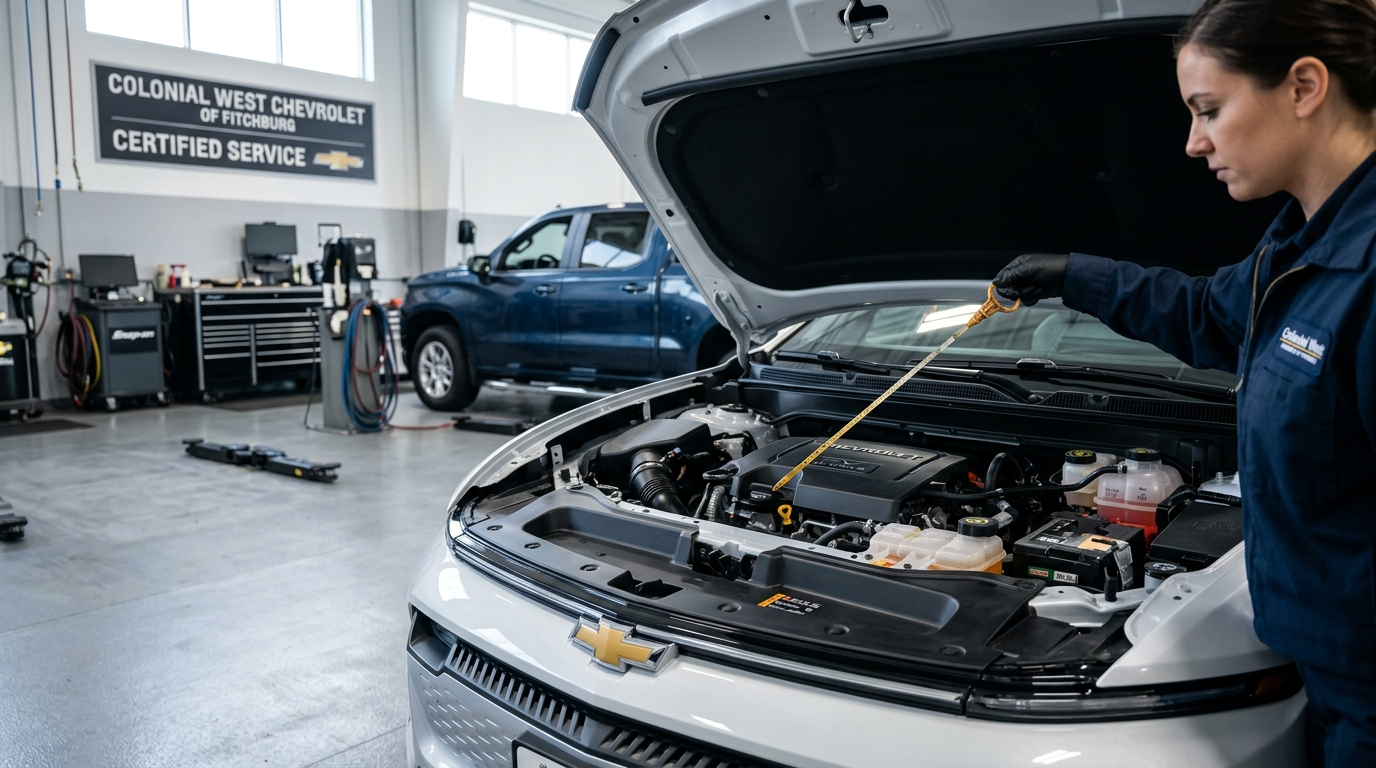





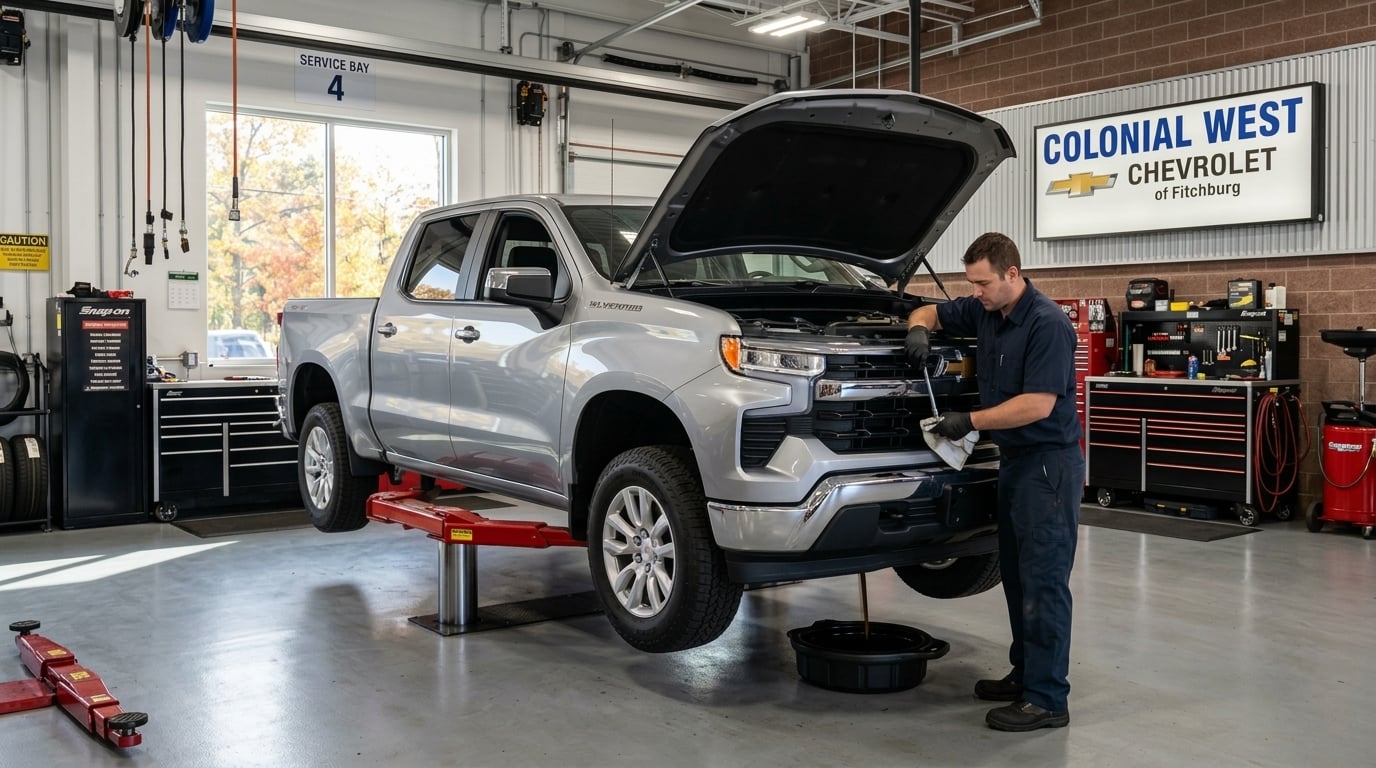
A standard full synthetic oil change for a gasoline-powered 2026 Chevrolet Silverado typically costs between $75 and $105, while service for a 3.0L Duramax turbo-diesel model generally ranges from $110 to $180 or more. The final price depends primarily on your truck's specific engine, fluid capacity, required oil specifications, and applicable environmental fees. +----------------------+--------------------+-------------------+ | Engine Option | Required Oil Spec | Typical Cost Range| +----------------------+--------------------+-------------------+ | 2.7L TurboMax 4-Cylinder | GM dexos1 Gen 3 5W-30 | $75 - $95 | | 5.3L V8 Gasoline | GM dexos1 Gen 3 0W-20 | $80 - $105 | | 6.2L V8 Gasoline | GM dexos1 Gen 3 0W-20 | $85 - $110 | | 3.0L Duramax Turbo-Diesel| GM dexosD 0W-20 | $110 - $180+ | +----------------------+--------------------+-------------------+ Oil changes represent one of the most critical preventive maintenance services for light-duty and heavy-duty trucks. Smaller gasoline engines require fewer quarts of motor oil, keeping base service prices near the lower end of the spectrum. Larger V8 engines and high-capacity diesel powertrains mandate additional quarts of specialized lubricant and heavy-duty filters, which increases the total cost of parts and labor. Several variables influence the final price on your service invoice: Engine Oil Capacity: Base oil change packages often cover up to 5 quarts of oil. Larger truck engines require between 6 and 10 quarts, and extra quarts of full synthetic oil add $7 to $12 per quart to the total. Oil Specification Standards: Modern GM engines require synthetic lubricants meeting GM dexos1 Gen 3 standards for gasoline engines or GM dexosD standards for diesel engines, which cost more than conventional oils but protect engine components far better. Oil Filter Design: High-flow cartridge filters and heavy-duty spin-on filters engineered for turbocharged or diesel applications carry a higher component cost than basic spin-on filters used in smaller passenger vehicles. Disposal and Shop Fees: Used oil recovery, hazardous material processing, and local recycling fees usually add between $5 and $15 to the final bill. To get an accurate estimate tailored to your truck's exact trim and engine setup, you can speak directly with our service team by making a quick call to (978) 342-8713 or by visiting our service department at 314 John Fitch Hwy. Table of Contents What Oil Specification and Capacity Does Your Silverado Engine Require? Why Does a Duramax Diesel Silverado Oil Change Cost More Than a Gas Model? How Does the Chevrolet Silverado Oil Life Monitoring System Work and How Do You Reset It? What Is Included in a Certified Chevrolet Multi-Point Inspection and Service Visit? Common Questions About Chevrolet Silverado Oil Change Service Where Can You Get Certified Chevrolet Silverado Oil Change Service? What Oil Specification and Capacity Does Your Silverado Engine Require? The 2024 Chevrolet Silverado requires full synthetic motor oil that strictly meets GM dexos1 Gen 3 specifications for gasoline engines or GM dexosD specifications for diesel engines, with fluid capacities ranging from 6 to 10 quarts depending on the exact engine installed under the hood. Using non-approved motor oil can compromise engine protection, reduce fuel efficiency, and potentially void factory warranty coverage under the 3-year/36,000-mile bumper-to-bumper warranty or 5-year/60,000-mile powertrain warranty. +----------------------+---------------+----------------+ | Engine Configuration | Oil Capacity | Viscosity Grade| +----------------------+---------------+----------------+ | 2.7L TurboMax Inline-4 | 6 quarts | SAE 5W-30 | | 5.3L EcoTec3 V8 | 8 quarts | SAE 0W-20 | | 6.2L EcoTec3 V8 | 8 quarts | SAE 0W-20 | | 3.0L Duramax Turbo-Diesel-I6 | 10 quarts | SAE 0W-20 (dexosD) | +----------------------+---------------+----------------+ The 2.7L TurboMax turbocharged four-cylinder engine generates 310 hp and 430 lb-ft of torque. This powertrain relies on high-boost turbocharging, which generates elevated thermal stress within the engine bay. To protect internal bearings and turbocharger oil lines, GM specifies 6 quarts of SAE 5W-30 full synthetic oil meeting GM dexos1 Gen 3 requirements. This specification contains advanced thermal oxidation inhibitors designed to prevent low-speed pre-ignition and sludge buildup in forced-induction engines. Naturally aspirated V8 options, including the 5.3L V8 and 6.2L V8, feature larger crankcases that take 8 quarts of SAE 0W-20 full synthetic oil. The lower viscosity grade reduces internal fluid friction across the valve train and cylinder walls, assisting active fuel management systems while maintaining high-temperature film strength during heavy hauling or towing operations. Trucks operating under demanding workloads—such as hauling firewood or pulling snowmobile trailers through steep rural grade ascents near Ashburnham—place heavy stress on engine oil. Certified technicians ensure that every fill meets factory viscosity and volume guidelines, preventing premature oil shear and engine wear. Why Does a Duramax Diesel Silverado Oil Change Cost More Than a Gas Model? A Duramax diesel Silverado oil change costs more than a gas model because the inline-six engine requires up to 10 quarts of heavy-duty diesel motor oil, specialized high-capacity filtration, and additional maintenance checks unique to diesel emissions systems. The combination of larger fluid volume and specialized chemical formulations increases both parts and labor costs compared to standard gasoline oil services. The primary factor driving higher diesel oil change expenses is fluid volume. While a standard four-cylinder truck engine uses 6 quarts of oil, the 3.0L Duramax turbo-diesel engine requires 10 quarts of GM dexosD full synthetic oil. This specialized oil is formulated with low-SAPS (sulfated ash, phosphorus, and sulfur) technology to protect delicate diesel particulate filters and exhaust gas recirculation components from ash accumulation and chemical fouling. The physical hardware on diesel engines also contributes to the maintenance investment. Diesel oil filters feature heavier synthetic filtration media designed to trap fine soot particles generated during high-compression diesel combustion. During a diesel oil service visit, factory-trained technicians also inspect soot loading, check fuel filters, and top off exhaust fluid levels. Under standard General Motors complimentary maintenance terms for initial ownership, diesel models include a top-off of ACDelco Diesel Exhaust Fluid up to 4 gallons alongside the primary oil service, tire rotation, and vehicle inspection. How Does the Chevrolet Silverado Oil Life Monitoring System Work and How Do You Reset It? The Chevrolet Silverado Oil Life Monitoring System calculates remaining oil life using an advanced engine computer algorithm that continuously tracks engine revolutions, operating temperatures, idle time, and vehicle load rather than relying on a simple mileage counter. On high-trim models equipped with the 13.4-inch touchscreen display, drivers can view the remaining oil percentage and reset the monitor through the vehicle software menu after completing an oil change. The system adapts dynamically to individual driving conditions. Frequent short trips in cold winter weather, extended idling on job sites, or heavy stop-and-go towing through Ashby accelerate oil breakdown, causing the system to alert the driver for service sooner than a highway-driven truck would require. When remaining oil life drops below 15 percent, the driver information center displays a "Change Engine Oil Soon" message. +------------------------------------------------+ | Touchscreen Reset Steps (High-Trim Silverados) | +------------------------------------------------+ | 1. Turn the vehicle ignition to the ON position with the engine off. | 2. On the 13.4-inch center touchscreen, select the "Vehicle Info" icon. | 3. Scroll through the vehicle status menu and tap on "Oil Life". | 4. Press and hold the "Reset" button on the screen until the display reads 100%. | 5. Turn the ignition off, then restart the truck to confirm the reset successfully. +------------------------------------------------+ For models utilizing driver steering wheel controls rather than the central touchscreen, navigate to the Information tab on the instrument cluster display, scroll down to Oil Life, and press and hold the thumbwheel control knob until the system chimes and resets to 100 percent. What Is Included in a Certified Chevrolet Multi-Point Inspection and Service Visit? A certified Chevrolet oil change service visit includes a drain and refill of factory-approved full synthetic oil, a new OEM oil filter, a four-tire rotation, and a comprehensive multi-point vehicle inspection covering safety systems, underbody components, and vital fluid levels. This multi-system check identifies early wear items before they turn into unexpected breakdowns on the road. During a standard maintenance visit, certified technicians execute a thorough inspection protocol that evaluates: Brake System Integrity: Measuring front and rear brake pad thickness, rotor surface condition, and hydraulic line security. Tire Wear and Alignment Check: Inspecting tread depth across outer, center, and inner grooves, examining sidewalls for damage, and adjusting inflation pressure. Fluid Level Verification: Inspecting and topping off windshield washer fluid, engine coolant, transmission fluid, and power steering or brake reserves. Underbody and Suspension: Checking drive belts, hoses, shocks, struts, ball joints, steering linkage, and exhaust heat shields for wear or play. Electrical and Battery Health: Testing battery cold-cranking amps, terminal corrosion levels, wiper blade condition, and exterior lighting operations. Staying current with factory inspection schedules helps safeguard long-term mechanical reliability. Owners can explore current service and parts specials to save on seasonal upkeep, or easily schedule a service appointment online to secure a convenient drop-off time. Common Questions About Chevrolet Silverado Oil Change Service Q: How many quarts of oil does the 2.7L TurboMax engine require? The 2.7L TurboMax turbocharged inline four-cylinder engine requires exactly 6 quarts of SAE 5W-30 full synthetic motor oil meeting GM dexos1 Gen 3 standards. Filling the engine with the exact recommended capacity ensures proper oil pressure across the variable-displacement oil pump and maintains cooling flow to the turbocharger center bearing assembly. Q: Does using non-dexos approved oil affect my Silverado warranty? Using motor oil that does not meet official GM dexos specifications can jeopardize factory warranty coverage if engine damage occurs as a direct result of improper lubrication. General Motors engineers formulated dexos standards to prevent internal sludge, oil oxidation, and low-speed pre-ignition in modern high-compression engines. Using non-approved oil during the 3-year/36,000-mile bumper-to-bumper warranty or 5-year/60,000-mile powertrain warranty window can result in disputed repair claims for engine failures. Q: How often should I change the oil in a 2024 Chevrolet Silverado if I tow frequently? If you frequently tow heavy trailers, haul equipment, or operate in severe weather conditions, you should follow the Oil Life Monitoring System alerts and plan on oil service intervals closer to every 3,000 to 5,000 miles. Heavy loads and prolonged idling raise oil temperatures and accelerate additive depletion. Even under light driving conditions, motor oil should be changed at least once every 12 months regardless of mileage. Q: Can I bring my Silverado in for an oil change without an appointment? Our service department offers express lube lanes to handle routine oil changes, tire rotations, and battery tests without requiring an advance reservation. However, booking an appointment ahead of time ensures priority placement in a service bay, reduces your total waiting time, and allows technicians to pre-order any specialized filters or fluids required for your vehicle trim. Q: How long does a standard Silverado oil change take at the dealership? A standard Chevrolet Silverado oil change and multi-point vehicle inspection typically takes between 30 and 45 minutes from the time your truck enters the service bay. If additional maintenance items are requested—such as engine air filter replacement, cabin air filter installation, or brake fluid flushing—total service time may extend to approximately one hour. Where Can You Get Certified Chevrolet Silverado Oil Change Service? You can get certified Chevrolet Silverado oil change service at Colonial Chevrolet-West, INC., where factory-trained technicians use genuine GM parts, specialized service tools, and manufacturer-approved dexos lubricants engineered specifically for your truck. Professional maintenance performed by certified professionals protects your vehicle's mechanical health and preserves its resale value over time. Relying on factory-trained service advisors provides distinct ownership advantages: Factory-Trained Technicians: Mechanics who specialize exclusively in Chevrolet powertrains understand the subtle diagnostic nuances of TurboMax, EcoTec3 V8, and Duramax diesel engines. Genuine OEM Parts: We install GM Genuine Parts and ACDelco filters engineered to exact factory tolerances for optimal filtration and oil flow rates. Updated Technical Bulletins: Dealership service teams have direct access to GM software updates, recall notices, and technical service bulletins that independent quick-lube shops cannot access. Complete Vehicle Records: All completed services are logged directly into the national GM service database, maintaining a clean, verifiable service history for your truck. When your driver information center alerts you that it is time for fresh motor oil, trust our team to get the job done right. To plan your visit, get direct route details to our service center location or give our service department a call at (978) 342-8713 to reserve your maintenance appointment today. © 2026 Colonial Chevrolet-West, INC.. All rights reserved.

How Do You Choose the Right Tires for a 2027 Chevrolet Traverse?
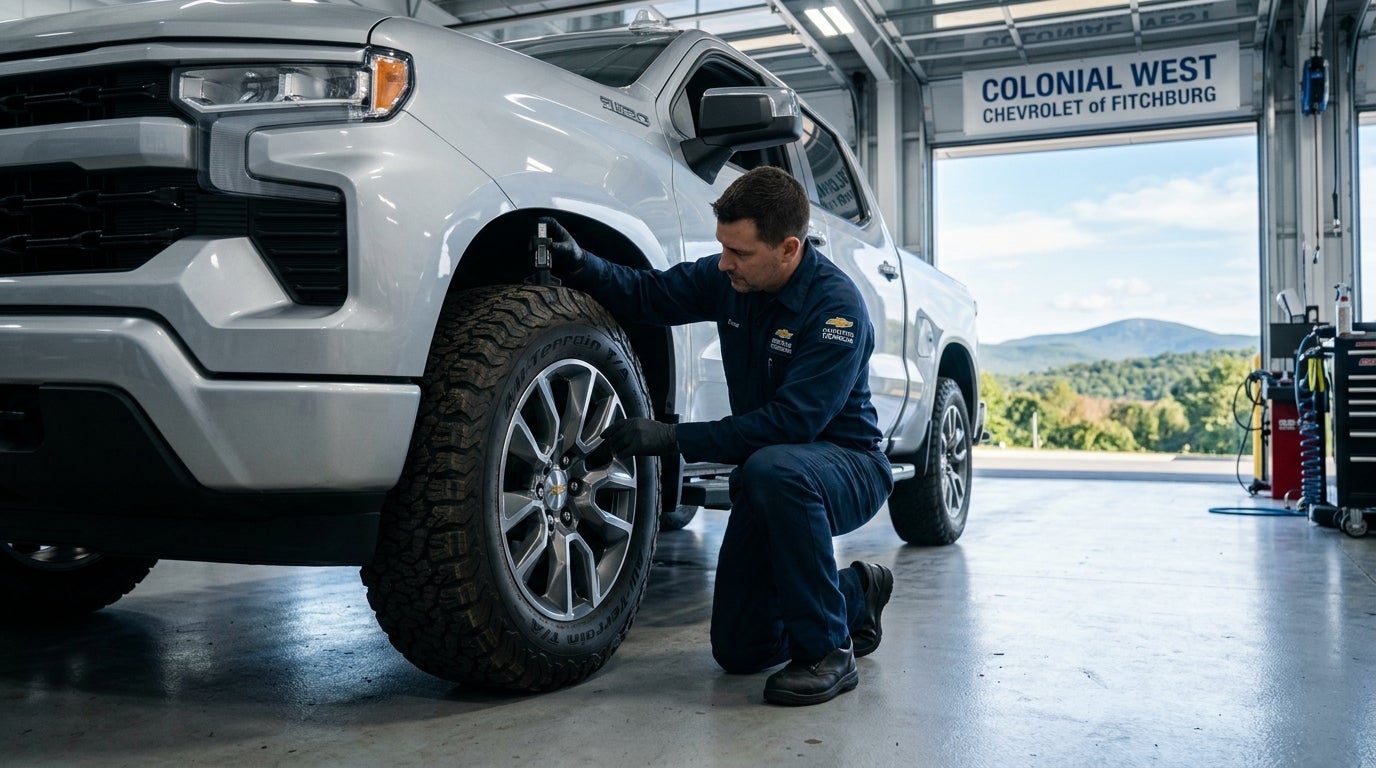
To choose the right tires for a 2027 Chevrolet Traverse, match the tire size, load rating, and tread pattern to your specific trim level—ranging from 18-inch all-season or all-terrain setups to 22-inch high-performance options—while ensuring all four tires share matching tread depths for All - Wheel Drive safety. Selecting tires optimized for central Massachusetts winter conditions keeps your three-row family SUV responsive, quiet, and secure year-round. Selecting replacement tires for a mid-size SUV requires balancing vehicle weight, drivetrain demands, and regional driving conditions. The 2027 Chevrolet Traverse comes factory-equipped with specific wheel and tire configurations designed around individual trim dynamics. The LT trim uses versatile all-season tires, while the off-road Z71 features specialized all-terrain rubber with reinforced sidewalls. Sportier trims like the RS and High Country incorporate low-profile street tires mounted on larger alloy wheels. Maintaining these factory dimensions is critical for handling accuracy, speedometer calibration, and electronic safety system performance. Equally important is drivetrain health. Because most 2027 Traverse models feature an All-Wheel Drive or advanced Twin-Clutch AWD system, running mismatched tire sizes or severely unequal tread depths creates variance in wheel rotational speeds. This variance places mechanical stress on the transfer case and rear differential modules. When replacing worn tires, installing a matching set of four ensures uniform traction and protects complex drivetrain components from unnecessary wear. Regular maintenance plays a foundational role in maximizing tire performance and longevity. During routine multi-point inspections, service technicians check inflation levels, evaluate tread depth across all four wheel positions, and check for hidden suspension misalignment. If you need assistance selecting the correct factory-spec tire or want a tread health evaluation, stop by our Fitchburg service center at 314 John Fitch Hwy or give our service advisors a quick call at (978) 342-8713. Table of Contents What Standard Tire Sizes, Load Ratings, and Speed Ratings Fit the 2027 Chevy Traverse? Should You Switch to Dedicated Winter Tires for Driving in This Area? How Do You Diagnose Uneven Tire Wear and Relearn the TPMS After Rotation? What Additional Installation Costs and Service Fees Come with New Traverse Tires? Frequently Asked Questions About Chevrolet Traverse Tire Selection and Maintenance Schedule Certified Chevrolet Traverse Tire Service and Maintenance What Standard Tire Sizes, Load Ratings, and Speed Ratings Fit the 2027 Chevy Traverse? The 2027 Chevrolet Traverse in Leominster uses factory tire sizes spanning 18, 20, and 22 inches depending on trim level, requiring load index ratings between 109 and 112 alongside H or V speed ratings. Chevrolet fits each 2027 Traverse trim with distinct wheel diameters and tire profiles to support specific driving characteristics: Traverse LT: Standard equipment includes 18-inch aluminum wheels wrapped in 255/65R18 all-season tires. Available LT equipment packages upgrade to 20-inch wheels paired with 255/55R20 all-season tires for enhanced steering feedback. Traverse Z71: Standard equipped with 18-inch high-gloss Black machined-face aluminum wheels fitted with 265/65R18 all-terrain tires. This setup provides taller rubber sidewalls that absorb trail impacts and guard wheel rims against curb damage and road debris. Traverse RS & High Country: Standard fitted with 22-inch high-gloss Black or machined-face wheels riding on 275/45R22 tires. The shorter sidewall profile increases cornering firmness and gives the vehicle a sporty street profile. Load and speed ratings are critical engineering factors for replacement tire selection. The Chevrolet Traverse requires a load index of at least 109 (supporting up to 2,271 lbs per tire) to 112 (supporting up to 2,469 lbs per tire). This weight capacity safely accommodates the vehicle's curb weight, seven- or eight-passenger cabin loads, maximum interior cargo volume of about 98 cubic feet, and standard trailering capacities up to 5,000 lbs. Installing tires with lower load ratings compromises structural integrity and increases heat buildup under heavy loads. Speed ratings must also comply with factory specifications. Traverse replacement tires require an H rating (certified up to 130 mph) or a V rating (certified up to 149 mph). These ratings reflect not just top speed capabilities, but also tire construction strength, heat dissipation efficiency, and cornering stiffness under sudden maneuvers. Maintaining correct cold tire inflation pressure is another essential factor. Chevrolet specifies a recommended cold tire pressure of 35 PSI for all four tires on most Traverse configurations. Correct inflation ensures uniform contact with the road, prevents premature wear along the outer edges, and optimizes fuel efficiency for the 2.5L turbocharged engine. Should You Switch to Dedicated Winter Tires for Driving in This Area? Installing dedicated winter tires on a 2027 Chevrolet Traverse in Massachusetts delivers substantially shorter stopping distances and improved cornering stability whenever ambient temperatures remain below 45 degrees Fahrenheit, outperforming standard all-season tires on cold, icy, or snow-covered pavement. Central Massachusetts winter conditions expose vehicle tires to freezing temperatures, frequent slush, and heavily salted road surfaces. Standard all-season rubber compounds begin to harden as temperatures drop below 45 degrees, losing flexibility and surface adhesion even on completely dry pavement. Dedicated winter tires are formulated with advanced flexible polymer compounds and dense tread siping that maintain elasticity in sub-freezing weather. Winter tires featuring the Three-Peak Mountain Snowflake (3PMSF) symbol provide specialized design benefits: Hydroplaning and Slush Resistance: Directional tread patterns and deep lateral grooves push standing water and slush away from the tire footprint. Braking and Traction: Micro-sipes bite into hard-packed snow and ice, creating additional friction edges that significantly reduce stopping distances during emergency braking. Drivetrain Synergy: Pairing winter tires with All-Wheel Drive or the Z71 trim's Twin-Clutch AWD creates maximum control. While AWD provides drive torque to all wheels, only tire tread grip provides steering direction and stopping traction. For households navigating elevated rural routes and hilly secondary roads, such as those surrounding Watatic Mountain in Ashburnham, dedicated winter tires offer essential control during winter storms. Maintaining two dedicated tire sets—all-season or all-terrain rubber for spring through autumn, and 3PMSF winter tires for cold months—extends the operating life of both sets while providing optimal safety year-round. How Do You Diagnose Uneven Tire Wear and Relearn the TPMS After Rotation? Uneven inner or outer shoulder wear on a 2027 Chevrolet Traverse tire indicates wheel alignment variance or persistent pressure loss, while TPMS relearning requires triggering the dashboard Driver Information Center menu or using a handheld diagnostic tool after rotating tires every 7,500 miles. Regular tire inspection helps identify mechanical alignment issues before they destroy tire tread life: Inner Edge Wear: Excessive wear localized on the inner tire shoulder usually points to excessive negative camber or toe-out alignment. This issue often develops after striking severe potholes or worn suspension bushings. Outer Edge Wear: Heavy outer shoulder wear typically results from excessive toe-in alignment settings or aggressive cornering at high speeds. Dual Shoulder Wear: Accelerated wear on both outer edges with normal center tread indicates chronic under-inflation, forcing the tire to ride heavily on its outer shoulders. Center Tread Wear: Accelerated wear down the center strip of the tread face stems from persistent over-inflation. Tread depth measurements dictate replacement timing. Federal safety standards set the minimum legal tread limit at 2/32 of an inch, marked by solid rubber wear bars across the tread grooves. However, tire manufacturers and service experts recommend replacing tires when tread reaches 4/32 of an inch, particularly before winter. Rain and snow evacuation capabilities diminish rapidly below this threshold, increasing hydroplaning risks. Rough road surfaces and frost-heaved pavement, common along the rural wooded roads around Ashby, gradually alter wheel alignment angles over time. Checking four-wheel alignment annually prevents premature shoulder scrub and extends tread life. Tire rotation every 7,500 miles distributes front steering and acceleration forces evenly. Because front tires wear faster due to turning friction, moving tires front-to-back balances wear rates across all four positions. After every tire rotation, the Tire Pressure Monitoring System (TPMS) must be relearned so the instrument cluster correctly displays the true tire pressure for each wheel position. Relearning the TPMS can be accomplished through the driver menu: Select the Tire Pressure monitor screen on the dashboard display using the steering wheel controls. Press and hold the thumbwheel select button until the horn chirps, signaling that the TPMS relearn mode is active. Use a physical TPMS sensor activation tool at each wheel position—starting with the left front tire and proceeding clockwise—until the vehicle horn chirps at each corner to confirm sensor position registration. Alternatively, our service department performs this recalibration digitally during routine tire maintenance. What Additional Installation Costs and Service Fees Come with New Traverse Tires? Total replacement costs for Chevrolet Traverse tires in Fitchburg include the price of the tire units plus routine service fees for mounting, dynamic high-speed balancing, fresh valve stems or TPMS seals, old tire recycling fees, and state environmental disposal taxes. Budgeting for new tires involves accounting for the complete professional installation process: Mounting and Dynamic Balancing: Dismounting old tires and securing new rubber onto alloy wheels requires specialized tire equipment to avoid rim scratching. High-speed dynamic balancing attaches small wheel weights to eliminate high-speed steering wheel vibrations and protect wheel bearings. TPMS Valve Service: Service technicians install fresh rubber valve stems or replace rubber sealing O-rings and valve cores on electronic TPMS sensors to prevent slow air leaks. Old Tire Disposal and Recycling: Standard environmental fees cover the safe, eco-friendly disposal and recycling of scrap tires in compliance with state regulations. Four-Wheel Alignment Check: Performing a four-wheel alignment alongside new tire installation ensures the suspension angles match factory settings, preventing immediate uneven wear on your new investment. Before purchasing replacement tires, review our current service and parts specials to take advantage of available maintenance offers, tire rebates, and bundled alignment packages. Frequently Asked Questions About Chevrolet Traverse Tire Selection and Maintenance Q: How do I check the exact factory tire size on my Chevy Traverse? The precise factory tire size for your specific 2027 Traverse is printed on the official Tire and Loading Information label, located on the driver-side center door pillar (B-pillar door jamb). This decal lists the original equipment tire dimensions, recommended load index, speed rating, and official cold tire inflation pressure of 35 PSI. Q: Does an All-Wheel Drive Chevy Traverse require all four tires to be replaced at once? Replacing all four tires simultaneously is strongly recommended on All-Wheel Drive Traverse models. Variance in tread depth exceeding 2/32 of an inch between tires alters individual wheel circumference and rotational speeds, creating mechanical drag and heat buildup across the transfer case and twin-clutch rear differential. Q: What is the recommended tire rotation interval for the 2027 Traverse? Chevrolet recommends rotating tires every 7,500 miles or at least once every six months, whichever comes first. Aligning tire rotations with standard engine oil and filter service intervals ensures consistent wear patterns across front and rear axles and extends the overall usable lifespan of the tire set. Q: How does wheel size impact ride comfort on the Traverse LT versus the RS trim? The 18-inch wheels on the LT trim utilize taller tire sidewalls ( 255/65R18) that absorb pavement bumps and pothole impacts efficiently, delivering a softer ride. The 22-inch wheels on the RS trim ( 275/45R22) feature shorter sidewalls that improve steering response and cornering stability while providing a firmer ride feel. Q: Can I drive on a Traverse tire that has reached 3/32 of an inch tread depth? While 3/32 of an inch tread depth remains legally above the 2/32 of an inch wear bars, traction in rain and snow drops off significantly. Replacing tires before they wear down to 3/32 of an inch helps prevent hydroplaning risks on wet highways and retains sufficient gripping edges for winter driving safety. Schedule Certified Chevrolet Traverse Tire Service and Maintenance Maintaining optimal tire tread, correct wheel alignment, and accurate inflation pressure ensures your 2027 Chevrolet Traverse handles smoothly, operates quietly, and delivers maximum safety across all road conditions. Whether you need a multi-point tire inspection, seasonal tire swap, computer-guided wheel alignment, or a fresh set of factory-recommended tires, our factory-trained service technicians deliver certified care tailored specifically to your vehicle. Take proactive steps to protect your vehicle's safety and driving dynamics today. Conveniently schedule your tire service online, drop by visit our Fitchburg service department at 314 John Fitch Hwy, or speak directly with an advisor by calling (978) 342-8713. © 2026 Colonial Chevrolet-West, INC.. All rights reserved.