





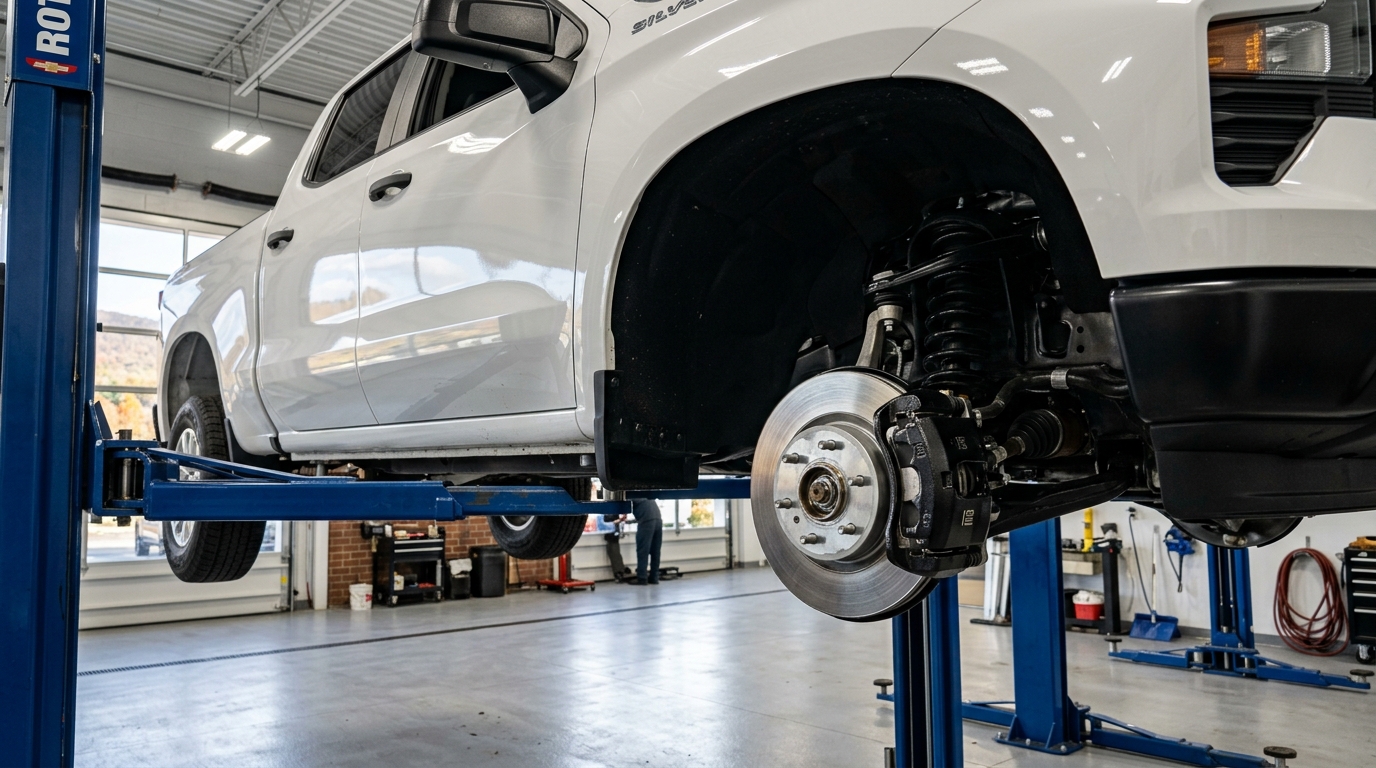
Essential 2026 Chevrolet Brake Care and Inspection Cycles
Chevrolet recommends a professional brake inspection at least every 7,500 miles to ensure the hydraulic system and friction materials remain within safe operating tolerances. This interval aligns with the standard maintenance schedule for the 2026 Chevrolet Silverado 1500 WT, which typically receives a multi-point inspection alongside its first synthetic oil change and tire rotation. Because braking components wear at different rates based on load and environment, consistent checks allow our team to identify thinning pads or surface irregularities before they compromise stopping distances.
Drivers who frequently navigate the steep descents near Mount Wachusett in Gardner often place higher thermal stress on their braking systems than those driving on flat highways. This localized heat buildup can accelerate the wear of the front brake pads, which handle the majority of the vehicle’s stopping force. During a standard service visit, our technicians measure pad thickness and inspect the brake lines for signs of moisture or cracking, which is especially critical for maintaining the 3 years / 36,000 miles bumper-to-bumper protection.
If you have noticed a change in pedal feel or an increase in stopping distance, you can book a maintenance appointment online to have your system evaluated. For those currently on the road and noticing a dashboard warning light, a quick call to our service desk can help determine if your vehicle requires immediate attention. If you are nearby and need an urgent inspection, you can find our Fitchburg service center located on John Fitch Highway.
Table of Contents
- Primary Brake Components and Replacement Expectations
- Chevrolet Duralife Rotors and Advanced Braking Systems
- Manufacturer Warranty and Maintenance Coverage for Brakes**
- Monitoring Brake Health and Safe Owner Maintenance Tasks
- Quick Answers Regarding Chevrolet Brake Service
- Maintaining Your Chevrolet Stopping Power
Primary Brake Components and Replacement Expectations
Brake pads are the most common wear item in the assembly, designed to sacrifice their friction material to protect the more expensive metal components. Most 2026 models, including the 2026 Chevrolet Traverse LT, utilize semi-metallic or ceramic pads that feature built-in wear indicators. These small metal tabs are engineered to emit a high-pitched chirping or squealing sound once the friction material reaches a specific thickness, serving as a mechanical early-warning system for the driver.
Rotors, the metal discs that the pads grip to stop the vehicle, generally last longer than pads but are subject to thinning and warping over time. Chevrolet guidelines specify that a rotor does not necessarily need to be resurfaced or replaced if it remains at least 1 mm thicker than the discard limit and shows no signs of steering-wheel vibration or pedal pulsation. However, in heavy-duty applications like the 2026 Silverado 1500, rotors may develop heat spots or scoring if the pads are allowed to wear down to the metal backing plates.
Beyond the friction pair, the braking system relies on calipers, hoses, and high-quality fluid to function. Calipers house the pistons that squeeze the pads, and while they are built for longevity, the rubber seals can eventually degrade. Brake hoses must be inspected for leaks or “ballooning” under pressure, which can lead to a soft or spongy pedal. Regularly replacing the brake fluid—typically every two to three years—prevents moisture from corroding the internal components of the Antilock Braking System (ABS) and ensures consistent performance in extreme temperatures.
Chevrolet Duralife Rotors and Advanced Braking Systems
Many 2026 Chevrolet trucks and SUVs come standard with Duralife brake rotors, which utilize a specialized Ferritic Nitro-Carburizing (FNC) process. This hardening treatment creates a surface that is significantly more resistant to corrosion and “rot” than traditional cast-iron rotors. By preventing the buildup of rust on the rotor face, these components help reduce pedal shudder and extend the service life of the rotors through the Ferritic Nitro-Carburizing process.
The rural roads and heavy winter salt application in Ashburnham make this corrosion resistance particularly valuable for local owners. While standard rotors might develop a layer of “lot rot” or surface rust after sitting in humid or salty conditions, Duralife technology keeps the braking surface clean. This is a standard feature on the 2026 Chevrolet Silverado 1500, ensuring that the 4WD system’s stopping power remains consistent even after a harsh New England winter.
For those driving the 2026 Silverado EV, the braking experience shifts toward regenerative technology. In these electric models, the electric motors perform a significant portion of the slowing by converting kinetic energy back into the battery. This process greatly reduces the physical wear on the pads and rotors. While the friction brakes are still present for emergency stops and final halts, owners of electric Chevrolet models often find that their traditional brake components last much longer than those on internal combustion vehicles, provided the calipers are still cleaned and lubricated regularly to prevent seizing from underuse.
Manufacturer Warranty and Maintenance Coverage for Brakes**
New 2026 Chevrolet vehicles include a basic warranty of 3 years / 36,000 miles, which covers defects in materials or workmanship for the entire braking system. While friction materials like pads and rotors are generally considered “wear items” and are not covered for normal depletion, they are protected if they fail prematurely due to a manufacturing flaw. Additionally, Chevrolet provides one complimentary maintenance visit within the first year of ownership, which includes a comprehensive multi-point inspection to verify the health of your brake lines, fluid levels, and pad thickness.
For long-term peace of mind, our team provides access to the Chevrolet Limited Lifetime Brake Pad Warranty on select GM Genuine Parts and ACDelco pads. This program is designed for owners who plan to keep their vehicles well beyond the initial warranty period; if the covered pads wear down to 2 mm or less, they can be replaced under the limited warranty when installed by an authorized service center. This coverage applies to the parts themselves and is a significant benefit for high-mileage drivers who prioritize using original equipment manufacturer (OEM) components.
In the event of a total brake system failure or a leak that makes the vehicle unsafe to drive, owners can rely on the included roadside assistance for 5 years / 60,000 miles. This service provides towing to the nearest authorized Chevrolet dealership, ensuring that any hydraulic issues are handled by certified technicians using calibrated tools. You can reach the dispatch center directly at Chevrolet Roadside Assistance: 1-800-243-8872 for emergency support.
Monitoring Brake Health and Safe Owner Maintenance Tasks
When we walk owners through the heavy-duty capabilities of a Silverado 1500 WT, they often ask about the standard four-wheel disc brakes and how the Duralife rotors handle the extra heat from towing. While the most intensive repairs should always be handled by a professional, there are several ways for owners to monitor their brake health at home. Periodically checking the brake fluid level in the translucent reservoir is a simple task; if the fluid is consistently low, it may indicate either significantly worn pads or a leak in the hydraulic lines.
Visual inspections are also possible through the spokes of many modern wheel designs. By using a flashlight, you can often see the outer brake pad and estimate its remaining thickness. If the friction material appears to be less than 3 mm (about the thickness of two pennies stacked together), it is time to schedule a professional measurement. Owners should also keep their wheels clean of excessive brake dust, as a heavy buildup can trap heat and moisture against the calipers, potentially leading to premature seal wear or corrosion.
Listening for changes in vehicle behavior is the most effective way to catch problems early. A “soft” pedal that sinks to the floor, a steering wheel that shakes during high-speed braking, or a grinding sound that occurs just as the vehicle comes to a stop are all indicators of urgent service needs. Because the 2026 Chevrolet Equinox LT features advanced Automatic Emergency Braking, maintaining the physical hardware of the system is essential for the electronic safety features to function as intended during a critical moment.
Quick Answers Regarding Chevrolet Brake Service
Q: What type of brake system is standard on 2026 Chevrolet Silverado and Tahoe models?
The 2026 Chevrolet Silverado 1500 and Tahoe come standard with a four-wheel disc brake system featuring Duralife rotors. These rotors undergo a Ferritic Nitro-Carburizing process to resist corrosion and provide a longer service life. Higher trims may also include an integrated trailer brake controller, which allows the driver to adjust the gain of electric trailer brakes directly from the cabin.
Q: Does the 2026 Chevrolet Corvette come with carbon-ceramic brakes?
Carbon-ceramic brakes are standard on the high-performance 2026 Corvette ZR1 and are available as an upgrade on the Z06 trim when equipped with the Z07 Performance Package. These brakes are designed for extreme track use, offering superior heat dissipation and weight savings, though they require specific inspection protocols compared to the standard steel units found on the Stingray.
Q: Do electric vehicle brakes last longer than those on gas-powered models?
Yes, vehicles like the Silverado EV typically see significantly less wear on their physical brake pads and rotors because of regenerative braking. The electric motor does much of the work to slow the vehicle, which preserves the friction material. However, owners should still have their brakes inspected every 7,500 miles to ensure the calipers remain lubricated and the fluid is free of moisture.
Q: What are the signs that my Chevrolet brakes need immediate replacement?
Common warning signs include a high-pitched squealing (from the wear indicators), a grinding metal-on-metal sound, or a pulsating sensation through the brake pedal. You may also notice the vehicle pulling to one side or a dashboard warning light. If you experience any of these, we recommend visiting our Fitchburg location for a diagnostic check.
Q: How often should I have the brake fluid inspected or flushed?
Brake fluid should be inspected at every 7,500-mile service interval to check for clarity and proper levels. Most manufacturers, including Chevrolet, suggest a full fluid flush every two to three years regardless of mileage. This is vital because brake fluid is hygroscopic, meaning it absorbs water over time, which can lower the boiling point and cause internal corrosion. You can often find discounts for this maintenance in our current service and parts specials.
Maintaining Your Chevrolet Stopping Power
The braking system is the most critical safety feature on your vehicle, and keeping it in peak condition requires a combination of owner vigilance and professional expertise. Whether you are hauling heavy loads with a Silverado 1500 or commuting in a Traverse LT, ensuring your pads and rotors are within factory specifications is the only way to guarantee the shortest possible stopping distances. Neglecting minor noises or vibrations can lead to more expensive repairs, such as damaged calipers or warped rotors, which can often be avoided with a simple 7,500-mile inspection.
Our team is dedicated to providing the specialized care your Chevrolet requires, using only GM Genuine Parts that are designed to fit your specific model perfectly. If you have questions about your brake pad life or want to take advantage of our lifetime pad warranty, reach out to our service department at (978) 342-8713. Reliable, manufacturer-backed maintenance and repair services help ensure safety on the road for every driver.
© 2026 Colonial Chevrolet-West, INC.. All rights reserved.
Connect with us


